


Laundry Rinse? What Is All This Fuss?
Not long ago, I wrote about fabric softeners and the strange things I started noticing after years of using them. Towels that no longer absorbed water. T-shirts that seemed to hold onto odors no matter how many times they were washed. Clothes that smelled heavily fragranced but somehow didn't feel truly clean.

Eventually, I moved away from traditional fabric softeners because I wanted my fabrics to behave like fabrics again. I wanted my towels to dry me off instead of pushing water around. I wanted my clothes to smell clean instead of smelling like a department store fragrance counter. Most of all, I wanted to stop coating everything I owned with products that seemed to create as many problems as they solved.
Then something new started showing up everywhere.
Laundry rinse.
At first, I didn't pay much attention to it. Then I started seeing more of it. Laundry rinse for activewear. Laundry rinse for sensitive skin. Laundry rinse for luxury fabrics. Laundry rinse for natural living. Then I stumbled across a product that promised to make laundry smell like designer cologne and I nearly spit out my coffee.
Wait a minute.
Weren't we just having a conversation about reducing fragrance overload?
Weren't consumers asking for simpler ingredients, cleaner labels, and products that treated fabrics more gently?
So what exactly is laundry rinse, and why has it suddenly become one of the hottest products in the laundry aisle?
More importantly, is it actually doing something different, or is it simply fabric softener with a new name and better marketing?
As I started researching ingredients, reading labels, and comparing brands, I discovered that the answer isn't nearly as simple as I expected.
Some laundry rinses appear to serve a very different purpose than traditional fabric softeners.
Others seem surprisingly familiar once you get past the attractive packaging and trendy language.
That raised an even bigger question for me. As consumers increasingly choose natural fibers like cotton, linen, and wool, and as many of us look for gentler detergents and more transparent ingredients, is laundry rinse actually filling a legitimate need? Or are we watching the laundry industry reinvent an old product for a new generation of shoppers?
Let's take a closer look.
Also Read 📖Welcome to Shellee’s Green – Nostalgia, Family & Honest Living
First Things First: What Exactly Is Laundry Rinse?
One of the first things I discovered is that there really isn't one standard definition of laundry rinse.
That surprised me.
When you buy detergent, you generally know what you're getting. When you buy bleach, you know what it does. But laundry rinse seems to mean different things depending on who's selling it.
Some brands market it as a residue remover.
Others position it as a fabric refresher.
Some promote it as a replacement for fabric softener.
A few seem to use it primarily as a fragrance delivery system.
And that's where things started getting interesting.
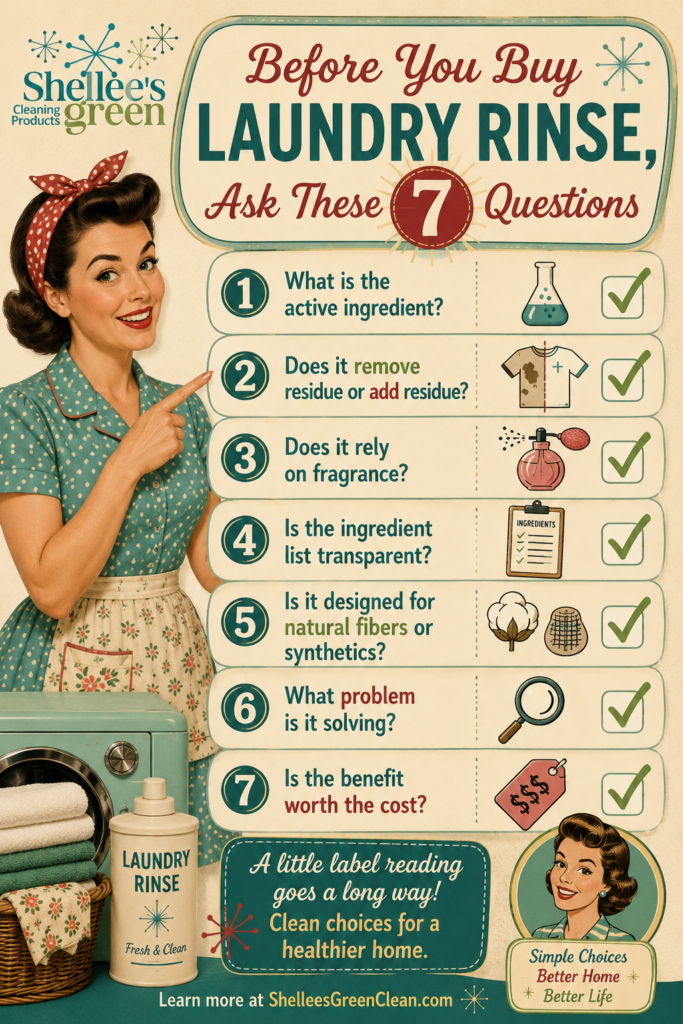
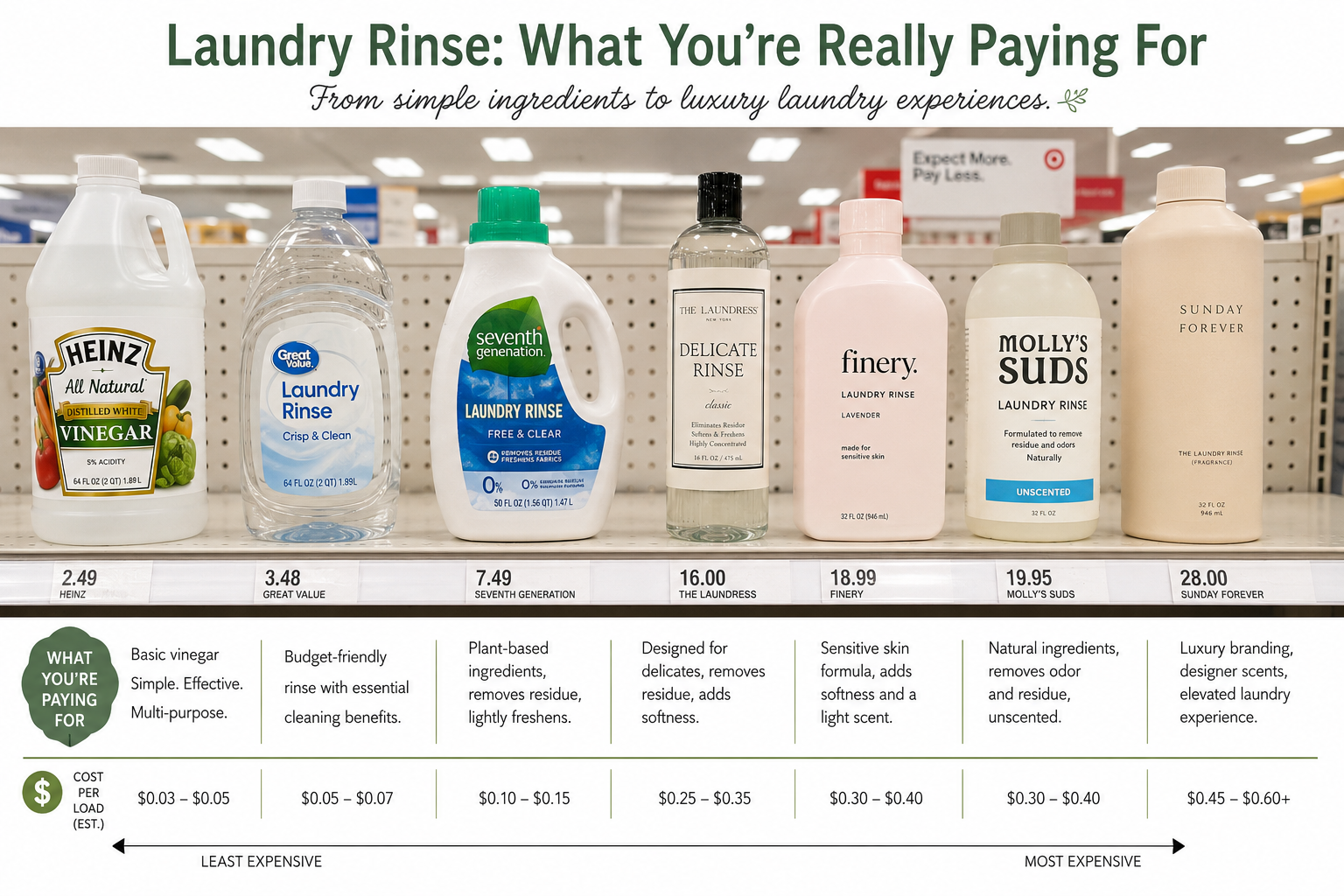
Because if we're going to spend $15, $20, or even $30 on a bottle of anything, I think it's fair to ask exactly what we're paying for.
Ingredient #1: Citric Acid — This One Made Sense
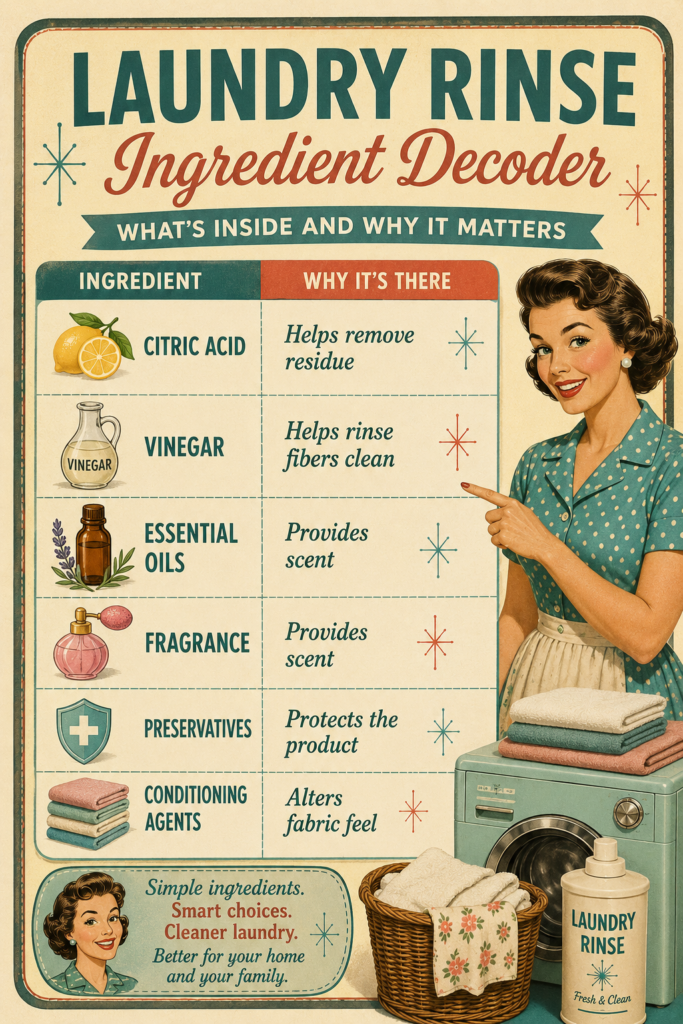
The first ingredient I started seeing over and over again was citric acid.
If you've ever squeezed a lemon into a glass of water or puckered after biting into a grapefruit, you've already met citric acid.
It's naturally found in citrus fruits such as:
🍋 Lemons
🍊 Oranges
🍈 Limes
🍊 Grapefruits
Today, most commercial citric acid is produced through fermentation rather than directly extracting it from fruit, but the chemistry is essentially the same.
What does it do in laundry?
Manufacturers use citric acid because it can help break down detergent residue, reduce mineral buildup from hard water, and improve rinsing performance.
Honestly?
This one made sense.
If detergent is the worker that cleans your clothes, citric acid feels a little like the cleanup crew that comes in afterward to make sure nothing unnecessary gets left behind.
This was one of the first ingredients that made me think:
"Okay, I understand why this is here."
Also Read 👚The Power of D-Limonene: A Smarter Way to Remove Stains Naturally
Ingredient #2: Vinegar-Based Rinses — Haven't We Been Doing This for Years?
The next thing I noticed was how many laundry rinses seemed to be built around the same concept many grandmothers have used for decades.
Vinegar.
Now before anyone panics, no, your clothes are not going to come out smelling like a bag of salt-and-vinegar potato chips.
When used properly, vinegar can help remove detergent residue and mineral buildup that may remain trapped in fabric fibers.
The more I looked at some of these premium laundry rinses, the more I found myself asking an uncomfortable question:
If a gallon of distilled white vinegar costs a few dollars, what exactly am I getting for $28.99?
Sometimes the answer may be convenience.
Sometimes it's fragrance.
Sometimes it's branding.
And sometimes there may be genuine formulation improvements.
But it's a question worth asking.
Because not every expensive solution is automatically a better solution.
Also read 👚The Problem With One-Size-Fits-All Cleaning Products | Shellee’s Green Clean
Ingredient #3: Essential Oils — Transparency Matters
This is where I found myself nodding along.
Many brands use essential oils such as lavender, lemon, eucalyptus, orange, or peppermint to provide a light scent.
Now let's be honest.
Essential oils are still chemicals.
Everything is chemicals.
The difference isn't that essential oils are magical.
The difference is transparency.
When a company says it uses lavender essential oil, I know what lavender is.
When a label says "fragrance," I know a lot less.
And that distinction matters.
Especially for consumers who are trying to better understand what they're bringing into their homes.
Ingredient #4: Fragrance Blends — Here's Where I Started Raising an Eyebrow
Then I started noticing something that made me pause.
Several products marketed as cleaner, simpler alternatives to fabric softener still contained fragrance blends.
Not essential oils.
Not specific plant extracts.
Just fragrance.
That immediately raised a question.
If one of the reasons many people are leaving fabric softeners behind is fragrance overload, why are we adding more fragrance back into the equation?
Now, there's nothing wrong with enjoying pleasant-smelling laundry.
I enjoy pleasant-smelling laundry.
But I think consumers deserve to know whether they're buying a rinse product designed to remove residue or a rinse product designed to leave something behind.
Those are two very different goals.
And yet some marketing materials blur that distinction completely.
Also Read 👚Essential Oils vs Fragrance Oils: What’s the Real Low-Down?
What I Found When I Started Reading Labels
When I started looking at laundry rinses, I noticed they generally fell into a few categories.
The Simple Formulas: These Just Made Sense
As I continued reading labels, I started noticing a completely different category of laundry rinse.
These weren't promising luxury fragrance experiences.
They weren't trying to make my laundry smell like a five-star resort, a designer handbag, or whatever else the marketing department had dreamed up that week.
Instead, brands like Molly's Suds and several vinegar-based rinses focused on a surprisingly short ingredient list.
Typically, I saw ingredients like:
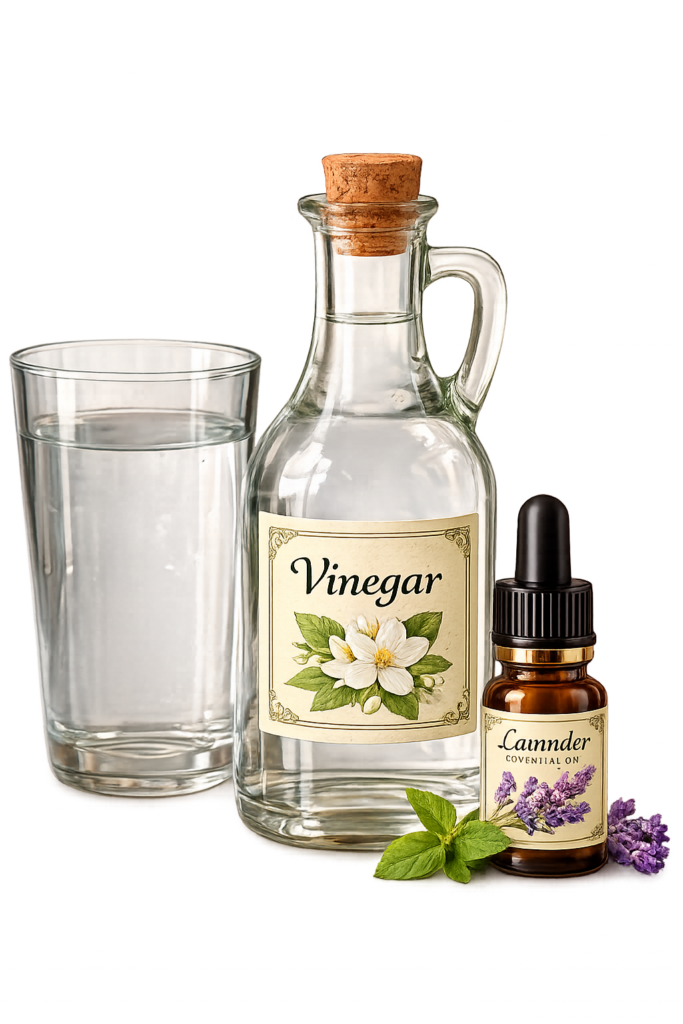
✔ Water
✔ Citric Acid
✔ Vinegar
✔ Essential Oils
✔ Preservatives
And honestly?
These products made sense to me.
Not because they're perfect.
Not because they're magical.
But because I could understand what they were trying to do.
That's becoming increasingly important to me these days.
When I pick up a bottle and can immediately identify why most of the ingredients are there, I feel a lot more confident about using it.
Water acts as the carrier.
Citric acid helps tackle residue and mineral buildup.
Vinegar helps rinse fibers clean.
Essential oils provide a light scent if desired.
Preservatives help keep the product stable and safe inside the bottle.
Simple.
Logical.
Purpose-driven.
Solving an Actual Laundry Problem
What I appreciated most was that these formulas seemed focused on addressing a real issue.
Detergent buildup.
Hard water minerals.
Residue trapped in fabrics.
Anyone who has ever pulled stiff towels out of the dryer or wondered why clothes don't feel quite as fresh as they used to knows these problems exist.
The goal of these rinses appeared to be helping fabrics return closer to their natural state.
Not coating them.
Not perfuming them.
Not transforming them into something they're not.
Just helping remove some of the things that may have accumulated over time.
That felt refreshingly practical.
The Lemonade Test
One of the little tests I use when evaluating a product is what I call the "lemonade test."
If I handed the ingredient list to my grandmother and said:
"Can you tell me what most of these ingredients do?"
Would she have a fighting chance?
With many of these simpler rinse formulas, the answer is yes.
Citric acid comes from the same family of compounds found in citrus fruits.
Vinegar has been used around homes for generations.
Essential oils come from plants.
The ingredients may have scientific names and specific functions, but the overall concept doesn't feel mysterious.
It feels familiar.
This Feels More Like Laundry Care
The more I compared simple formulas to some of the luxury products, the more I realized they seemed to be pursuing completely different goals.
One category appeared focused on helping fabrics rinse cleaner.
The other often appeared focused on creating a fragrance experience.
Neither approach is automatically right or wrong.
But personally, if I'm adding something to my rinse cycle, I want it to improve my laundry—not just perfume it.
That's why these simpler formulas resonated with me.
They felt less like a marketing trend and more like a practical tool.
The Shellee's Green Take
This is the category that made the most sense to me.
Not because it was the cheapest.
Not because it was the most natural.
But because I could clearly see the purpose behind the ingredients.
Every ingredient seemed to have a job.
And when products start making sense on paper, they usually make more sense in the laundry room too.
The Luxury Laundry Rinses: Haven't We Seen This Movie Before?
Then I found products positioned as luxury laundry experiences.

Some promised:
✔ Designer-inspired scents
✔ Long-lasting fragrance
✔ Boutique laundry experiences
✔ Luxury hotel freshness
✔ Premium lifestyle branding
And this is where I started slowing down and reading labels a little more carefully.
Because after everything I learned while researching fabric softeners, I couldn't help but notice some similarities.
One of the biggest reasons I stopped using traditional fabric softeners was because I realized I wasn't actually improving my fabrics.
I was coating them.
The softness wasn't coming from cleaner fibers.
It was coming from ingredients designed to sit on the fibers themselves.
The fresh smell wasn't necessarily because my clothes were cleaner.
It was because fragrance compounds had been intentionally left behind.
So when I started seeing laundry rinse products whose primary selling point was "long-lasting scent," I found myself asking an uncomfortable question:
Are we trying to improve fabric performance?
Or are we trying to perfume our laundry?
Because those are two very different goals.
The Fragrance Arms Race
At some point over the last few decades, the laundry industry seems to have entered what I call the Fragrance Arms Race.
First came scented detergents.
Then scented fabric softeners.
Then scent beads.
Then dryer sheets.
Now we're seeing luxury laundry rinses designed to leave behind fragrance that lasts for days or even weeks.
And honestly?
I'm not sure that's the direction many consumers were hoping things would go.
Especially when so many people are actively searching for simpler products, cleaner ingredients, and less fragrance in their homes.
When Laundry Starts Sounding Like Perfume
As I browsed product descriptions, I noticed language that sounded less like fabric care and more like a fragrance counter at a department store.
Notes of sandalwood.
Amber.
Cashmere.
Vanilla orchid.
Exotic florals.
Luxury cologne-inspired scents.
At one point I actually laughed and thought:
"When did my bath towels become a fashion accessory?"
Don't get me wrong.
I understand wanting laundry to smell pleasant.
Most of us do.
But when the scent becomes the primary feature, I think it's fair to ask whether we're still talking about laundry care—or simply another way to perfume our clothing.
This Is Where I Start Raising Both Eyebrows
What surprised me most wasn't the fragrances themselves.
It was the price tags attached to them.
Many of the most expensive laundry rinses weren't necessarily advertising better rinsing performance.
They weren't necessarily talking about residue removal.
They weren't necessarily discussing fabric longevity.
Instead, they were selling an experience.
A mood.
A lifestyle.
A luxury scent profile.
And while there's nothing wrong with treating yourself, that's a very different conversation from improving how your laundry performs.
The Shellee's Green Take
This is where some luxury laundry rinses begin to feel uncomfortably close to traditional fabric softeners.
Not because they're identical products.
But because the focus starts shifting away from fabric performance and back toward leaving something behind.
If I'm adding a product to my rinse cycle, I want to know:
- Is it helping remove residue?
- Is it improving absorbency?
- Is it helping fabrics last longer?
- Is it solving a real laundry problem?
Those benefits make sense to me.
But if the primary goal is simply making my towels smell like a luxury resort for three weeks, I'm not convinced that's a problem I need another bottle to solve.
And after spending years trying to remove unnecessary coatings and fragrances from my laundry routine, I'm not particularly eager to start putting them back.
Also Read 👚What Fabric Softener Really Does to Your Clothes
The Athletic Wear Rinses: This One Might Actually Be Different
As I started looking through laundry rinse products, I noticed an entire category dedicated specifically to activewear.
Because let's be honest, companies seem to create specialty products for everything these days.
Sometimes it feels like we're one marketing meeting away from seeing detergent designed exclusively for left-handed pickleball players.
Let's Be honest, athletic wear presents a unique challenge that most of our grandparents never had to think about.
The Problem Isn't the Sweat

The real problem isn't sweat itself.
Human sweat is mostly water along with small amounts of salts, proteins, and natural oils.
The challenge is what happens when those body oils become trapped inside synthetic fibers.
Unlike cotton, linen, or wool, many modern athletic fabrics are made from polyester, nylon, spandex, and other synthetic materials designed to wick moisture away from the body.
These fabrics are incredibly effective at moving sweat away from your skin during exercise.
Unfortunately, they can also hold onto body oils and odor-causing compounds more stubbornly than natural fibers.
Ever pull a workout shirt out of the dryer and think it smells clean, only to notice an odor reappear as soon as you start exercising?
You're not imagining it.
That happens to a lot of people.
Why Polyester Behaves Differently
Polyester is essentially a petroleum-based plastic fiber.
Its surface interacts differently with oils than natural fibers do.
Body oils can cling to polyester fibers more readily, and over time those oils may accumulate even after repeated washing.
That's one reason some athletic clothing develops what many people call "perma-stink."
You wash it.
You dry it.
It smells fine.
Then the moment you get warm, the odor magically returns.
It's enough to make you question your entire laundry routine.
This Is Where Some Laundry Rinses May Help
Several athletic-focused laundry rinses are formulated specifically to help remove:
✔ Residual body oils
✔ Detergent buildup
✔ Hard water deposits
✔ Odor-causing residues trapped in synthetic fabrics
Rather than softening the fabric, these products are often designed to help clean fibers more thoroughly during the rinse cycle.
That goal makes a lot more sense to me than simply adding another layer of fragrance.
Because if your gym clothes smell bad, covering them with a tropical waterfall scent isn't really solving the problem.
It's just creating sweaty tropical waterfalls.
And nobody wants that.
The Shellee's Green Take
This is one category where I can actually understand why a specialty laundry rinse exists.
Modern performance fabrics are very different from the cotton t-shirts and denim jeans most people wore fifty years ago.
They behave differently.
They hold odors differently.
And they sometimes require a different approach to care.
That doesn't mean every athletic laundry rinse is worth the price.
But it does mean this category appears to be addressing a legitimate problem rather than simply creating a new trend.
If you're constantly battling odors in workout clothes, hiking gear, uniforms, or moisture-wicking fabrics, this may be one area where a targeted rinse product could provide real value.
The key, as always, is reading the ingredients and understanding whether the product is removing the problem—or simply trying to perfume over it.
We'll take a closer look at that in an upcoming Shellee's Green article exploring why athletic wear seems to hold odors differently than cotton and other natural fibers and ways to eliminate those odors easily.
Also Read👚The Science of Odor Elimination: What Freshener Companies Don’t Want You to Know
The $30 Bottle Question
This is where I raised both eyebrows.
Some premium laundry rinses cost nearly thirty dollars for a bottle.
Thirty dollars.
For something that goes into the rinse cycle.
At that point, I think consumers have every right to ask:
What exactly am I paying for?
Is it a better ingredient?
A better formula?
A prettier bottle?
A trend?
A luxury experience?
Or simply better marketing?
Because when a product enters premium territory, the burden shifts.
The company should be able to clearly explain why its product delivers value beyond a much simpler alternative.
And frankly, not all brands do a very good job of that.
💞Shellee’s Laundry Day – Super Concentrated Laundry Detergent 64oz
So... Is Laundry Rinse Worth It?
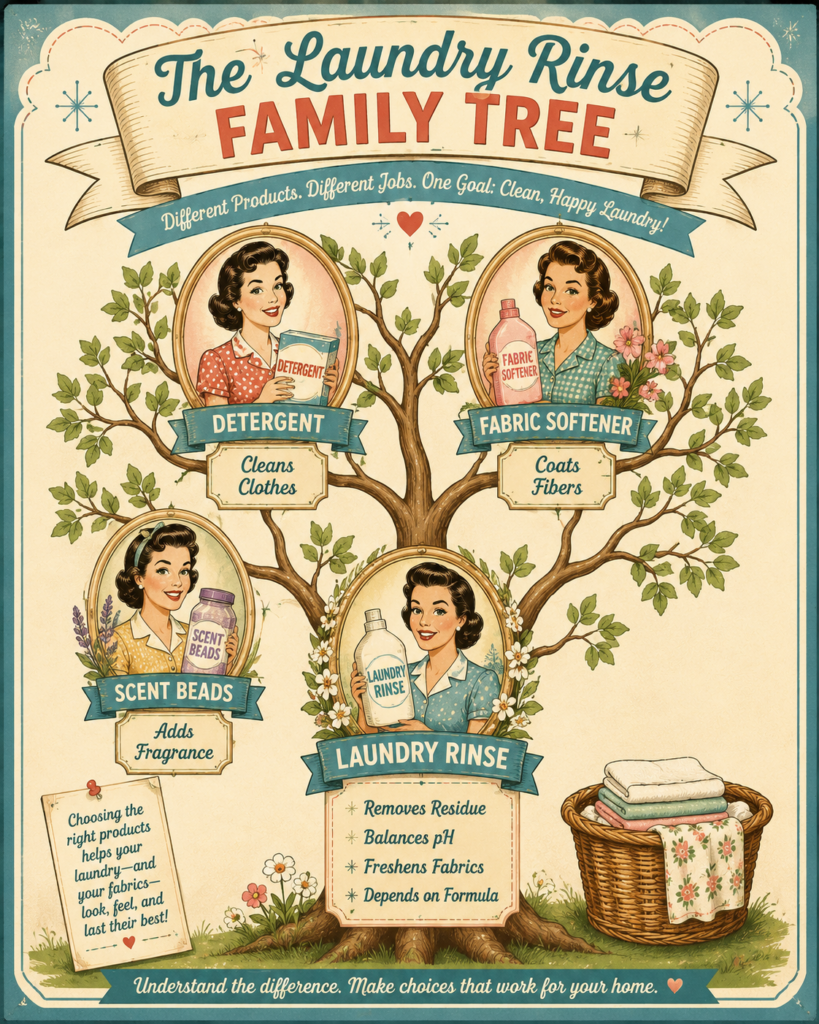
That's probably the question you've been waiting for.
And honestly?
I think the answer depends entirely on the product.
Some formulations appear thoughtfully designed to address real problems such as detergent buildup, hard water deposits, and fabric performance.
Others seem to focus heavily on fragrance, branding, and lifestyle marketing.
The challenge for consumers is that both products often sit on the same shelf under the same name.
That's why reading the ingredient label matters far more than reading the front of the bottle.
The front of the bottle sells a dream.
The ingredient list tells the story.
Also Read👚Investing in Your Laundry: Why Proper Fabric Care Really Matters
What Shellee Thinks...
After spending far too much time standing in laundry aisles reading labels, I've come to a fairly simple conclusion.
Laundry rinse isn't automatically a gimmick.
And it isn't automatically a miracle.
Some products appear to solve legitimate laundry problems.
Others appear to solve marketing problems.
The trick is knowing the difference.
At Shellee's Green, we're less interested in trends and more interested in understanding why a product exists in the first place.
What problem is it solving?
What ingredients are doing the work?
And is the benefit worth the cost?
Those are the questions I think every consumer should ask.
Because healthier living isn't about buying every new product that shows up on the shelf. Healthier claims are around every corner these days and it's up to you, the consumer to be aware!
It's about understanding the products you use, choosing the ones that genuinely serve a purpose, and feeling confident about the choices you make for your home and family. That is what will give you the healthier home you are looking for.
And that, in my opinion, is always worth investigating.
Who knows, Shellee's might just have her own laundry rinse coming out since, so keep your peepers open!
💞Shellee’s Products
Coming Soon from Shellee's Green
🌱 Are Scent Beads Just Fabric Softener in Disguise?

Frequently Asked Questions About Laundry Rinse
1. What is the difference between laundry rinse and fabric softener?
Traditional fabric softeners typically work by coating fabric fibers with conditioning agents that reduce friction and static. Laundry rinses, on the other hand, are often designed to help remove detergent residue, balance pH, or reduce mineral buildup. However, not all laundry rinses are created equally. Some contain ingredients that function similarly to fabric softeners, which is why reading the label is so important.
2. Is laundry rinse healthier than fabric softener?
It depends on the formulation.
Some laundry rinses contain relatively simple ingredients such as citric acid, vinegar, purified water, and essential oils. Others may contain fragrances, preservatives, conditioning agents, and additives that closely resemble traditional laundry products.
Rather than assuming a product is healthier because it is labeled "natural," consumers should evaluate the ingredient list and decide whether the formulation aligns with their goals.
3. What does citric acid actually do in laundry rinse?
Citric acid helps break down detergent residue, reduce mineral buildup from hard water, and support a cleaner rinse cycle.
Although many people associate citric acid with lemons and oranges, most commercial citric acid is produced through fermentation because it is more efficient and sustainable on a large scale.
Think of citric acid as part of the cleanup crew that arrives after the detergent has finished its work.
4. Can laundry rinse make towels more absorbent?
In some cases, yes.
When detergent residue, fabric softener buildup, or mineral deposits accumulate on towel fibers, absorbency may decrease over time. Laundry rinses that help remove buildup can allow towels to perform more like they were originally designed to.
Many people notice older towels become more absorbent after reducing fabric softener use and switching to a simpler rinse routine.
5. Does laundry rinse replace detergent?
No.
Laundry rinse is not designed to clean heavily soiled clothing.
Detergent remains the primary cleaning agent responsible for removing dirt, oils, stains, and soils. Laundry rinse is typically intended to support the rinse phase by helping remove leftover residues or improve fabric performance.
6. Are essential oils safer than synthetic fragrances?
Not necessarily safer, but often more transparent.
Essential oils are complex mixtures of naturally occurring plant compounds. Synthetic fragrances may contain dozens or even hundreds of undisclosed ingredients grouped under the term "fragrance."
For many consumers, the advantage of essential oils is knowing where the scent originates and having greater transparency regarding what is being added to fabrics.
7. Why are some laundry rinses so expensive?
Several factors contribute to cost:
- Premium branding
- Packaging
- Specialty ingredients
- Concentrated formulas
- Marketing claims
Sometimes the added cost reflects meaningful innovation. Other times consumers may be paying for convenience, aesthetics, or branding rather than dramatically different performance.
The best question to ask is whether the product solves a problem you actually have.
8. Can laundry rinse help reduce odors?
In some situations, yes.
If odors are being trapped by detergent residue, mineral buildup, or fabric coatings, a rinse product may help improve fabric freshness.
However, laundry rinse cannot compensate for improper washing, overloaded machines, or clothing that is not being thoroughly cleaned.
9. What ingredients should I pay attention to when shopping for laundry rinse?
Look for:
✔ Citric acid
✔ Vinegar-based formulas
✔ Transparent ingredient disclosure
✔ Clearly identified essential oils
You may also want to evaluate:
- Fragrance blends
- Conditioning agents
- Preservatives
- Proprietary ingredient claims
The more transparent the label, the easier it is to make an informed decision.
10. Is a simple vinegar rinse still a good option?
For many households, yes.
Distilled white vinegar remains one of the most affordable and widely used laundry rinse alternatives available.
While premium products may offer additional features, vinegar continues to provide a simple and cost-effective option for consumers who want to reduce residue and simplify their laundry routine.
At Shellee's Green, we believe the best solution is the one that works for your family, your budget, and your goals.
🏡Welcome to Shellee’s Green