


When Fresh Laundry Didn't Feel So Fresh
I grew up during the Downy era.
If you're anywhere near my age, you probably know exactly what I'm talking about. Back then, fabric softener wasn't just another laundry product—it was practically part of the definition of clean.
Everything was supposed to be Downy soft and Downy fresh. The commercials made it look like the secret to great laundry was simple: wash your clothes, pour in some fabric softener, and enjoy that fresh-from-the-laundry smell for days.
And honestly, that's exactly what we did.
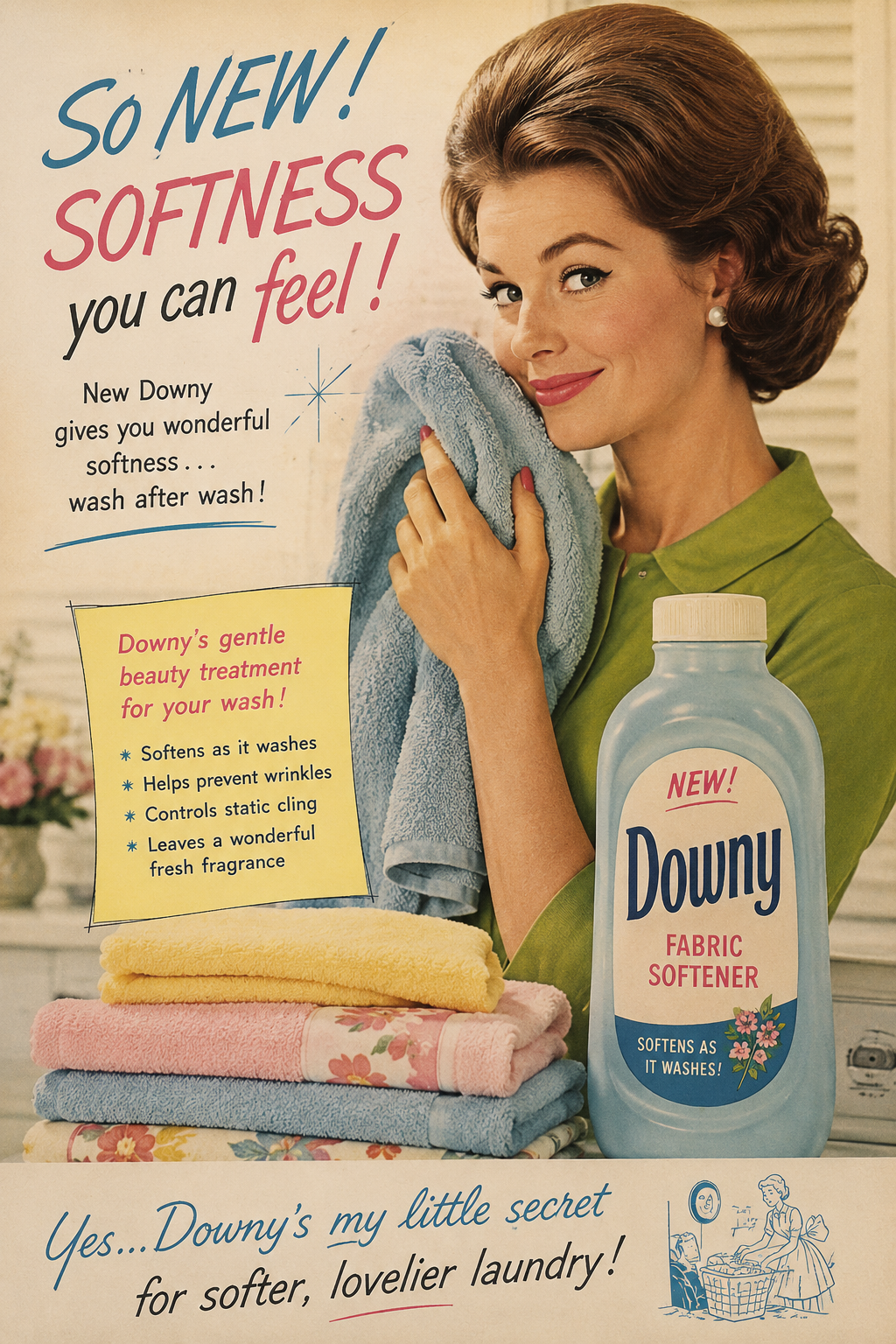
Our towels smelled like fabric softener. Our sheets smelled like fabric softener. Even clothes that had been sitting quietly in a dresser drawer for weeks still carried that familiar scent. At the time, I thought that smell meant the clothes were clean.
Then I started noticing things that didn't quite make sense.
Water would bead up on towels instead of soaking in.
My husband's t-shirts seemed to hold onto odors no matter how many times I washed them.
Older clothes developed a strange waxy smell that I couldn't quite describe. Instead of smelling fresh, they smelled coated.
Like many people, my solution was simple.
I added more fabric softener.
Then Gain entered the picture with scent boosters and laundry beads. Suddenly, it wasn't enough for clothes to smell fresh after washing. Now the commercials promised they would smell amazing for weeks—even after sitting in a dirty laundry basket.
A dirty laundry basket?
That was the moment I started asking questions.
How could dirty clothes still smell fresh? What exactly was creating that softness? And why did it seem like the more laundry products I added, the less clean my clothes actually felt?
The answers surprised me.
Because fabric softener doesn't actually make fabric soft in the way most of us have been led to believe.
A Brief History of Fabric Softener
Fabric softeners first appeared in the mid-20th century as synthetic fabrics became increasingly popular.
Early versions were designed to address a common complaint: synthetic materials often generated static electricity and felt stiff compared to natural fibers.
Manufacturers developed products that could coat fabric fibers, reducing friction and helping clothes feel smoother to the touch.
By the 1960s and 1970s, fabric softener had become a staple in American laundry rooms.
As time went on, the focus shifted from simply reducing static to creating a complete sensory experience. Softer fabrics. Stronger fragrances. Longer-lasting scents.
Eventually, liquid softeners were joined by dryer sheets, scent boosters, fragrance beads, and specialized laundry enhancers.
The laundry room became less about cleaning and more about creating a fragrance experience.
What Fabric Softener Actually Does
This is where things get interesting.
Most fabric softeners contain ingredients known as quaternary ammonium compounds, often called quats.
These positively charged compounds are attracted to fabric fibers. Once attached, they form a thin lubricating coating across the surface of the material.
Think of it like applying a conditioner to your hair.
The fabric itself doesn't change.
The coating changes how the fabric feels.
That coating helps:
- Reduce static cling
- Decrease friction between fibers
- Make fabrics feel smoother
- Carry fragrance compounds
This is why fabric softener creates the sensation of softness.
The softness comes from the coating—not from the fibers becoming naturally softer.
Also Read ☀️Investing in Your Laundry: Why Proper Fabric Care Really Matters
The Waxy Coating Most People Never Think About
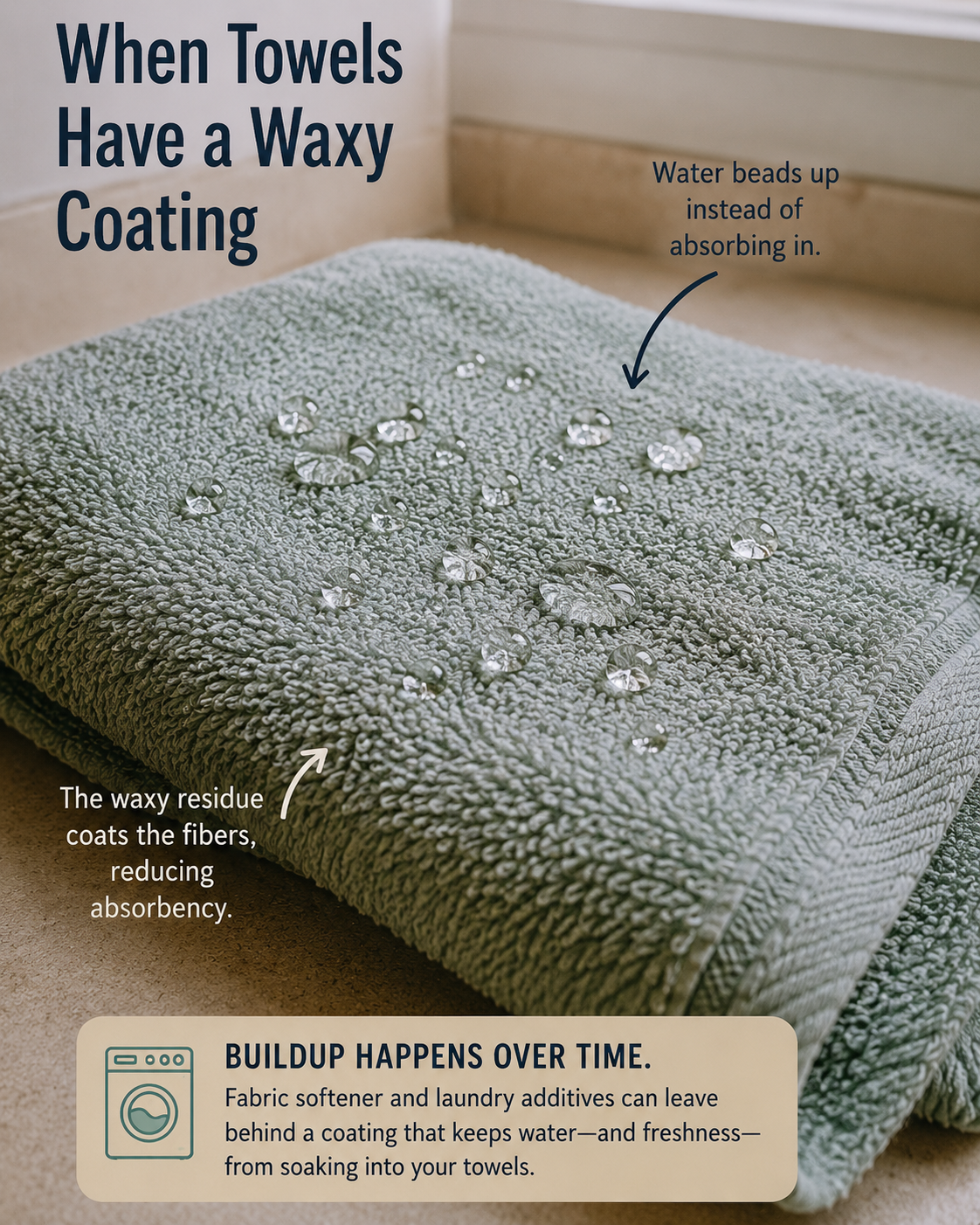
The more I learned, the more my old towels started making sense.
Imagine applying a thin layer of wax to a sponge.
It might feel smoother.
But would it absorb water better?
Probably not.
The same principle can apply to fabrics.
Over time, repeated applications of fabric softener can leave residue behind.
This buildup may contribute to:
- Reduced towel absorbency
- Less effective moisture-wicking athletic wear
- Lingering odors trapped in fibers
- Reduced breathability
- A coated or waxy feel
This doesn't happen overnight.
It develops gradually over months or years of repeated use.
Many people never connect the dots because the process happens so slowly.
What Creates That Long-Lasting Laundry Smell?
This is the question that started my entire journey.
How can dirty clothes still smell "fresh"?
The answer lies in fragrance chemistry.
Most fabric softeners contain fragrance blends that may include dozens or even hundreds of individual compounds.
These fragrance mixtures are specifically engineered to:
- Adhere to fabrics
- Release scent gradually
- Survive washing and drying
- Continue emitting fragrance during wear
The goal is not necessarily cleanliness.
The goal is scent retention.
That's an important distinction.
A shirt can smell strongly fragranced and still not be completely clean.
Likewise, a truly clean shirt may have very little scent at all.
Some consumers enjoy these fragrances, while others are choosing to reduce fragrance exposure as part of a broader effort to simplify the products they use throughout their homes.
Are Fabric Softeners Toxic?
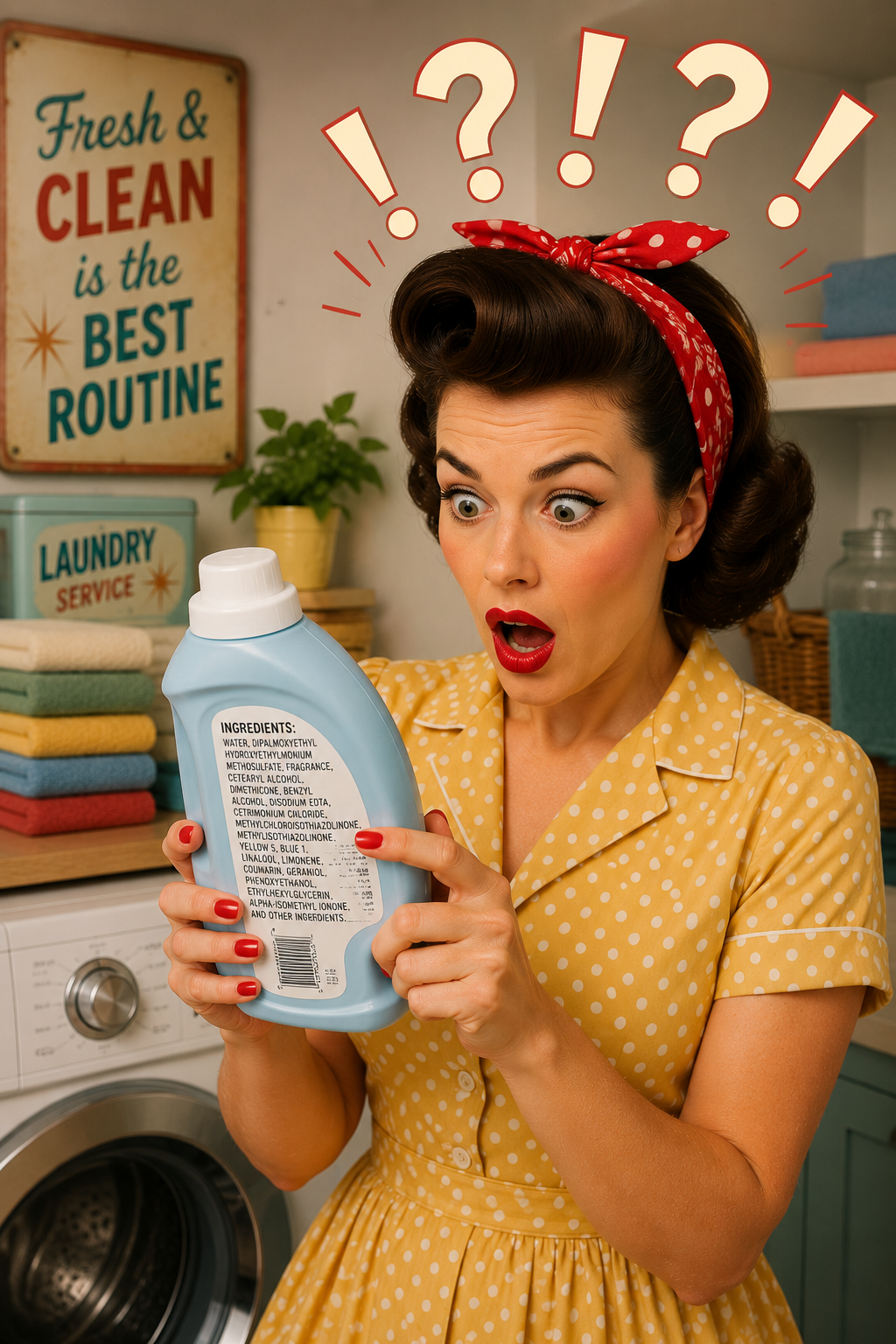
This is where the conversation gets interesting.
The short answer is that many conventional fabric softeners contain ingredients that have raised concerns among researchers, toxicologists, and health advocates for decades.
Most fabric softeners work by depositing a thin coating of chemicals onto fabric fibers. One of the primary groups of ingredients used for this purpose is known as quaternary ammonium compounds, often called quats.
Quats are effective at reducing static and creating the soft feel consumers expect, but some have also been identified as respiratory irritants and potential asthmagens—substances that may contribute to asthma symptoms in sensitive individuals.
Another concern involves fragrance.
Many fabric softeners contain complex fragrance mixtures designed to remain on clothing long after washing. These fragrances can release volatile organic compounds (VOCs) into the air. Studies have found that some laundry products emit VOCs that may contribute to headaches, dizziness, respiratory irritation, or discomfort in sensitive individuals.
For people with allergies, asthma, chemical sensitivities, or eczema, these fragrance compounds can sometimes be more problematic than the softening ingredients themselves.
The challenge for consumers is that the word "fragrance" on a label often doesn't tell the whole story.
A single fragrance blend may contain dozens—or even hundreds—of individual ingredients that are not required to be disclosed separately. Depending on the product, these mixtures may include solvents, preservatives, synthetic musks, and compounds such as phthalates, which have been studied for their potential effects on hormone function.
Does this mean every bottle of fabric softener is dangerous?
Not necessarily.
Risk depends on many factors, including the specific formulation, frequency of use, ventilation, individual sensitivities, and overall exposure from other products used throughout the home.
But it does mean consumers deserve to understand what they're putting on fabrics that touch their skin every day.
At Shellee's Green, we believe informed choices are better than blind trust. The goal isn't fear. The goal is understanding what these products do, what ingredients they contain, and whether they align with the kind of home environment you want to create.
Before Fabric Softener, There Was Sunshine
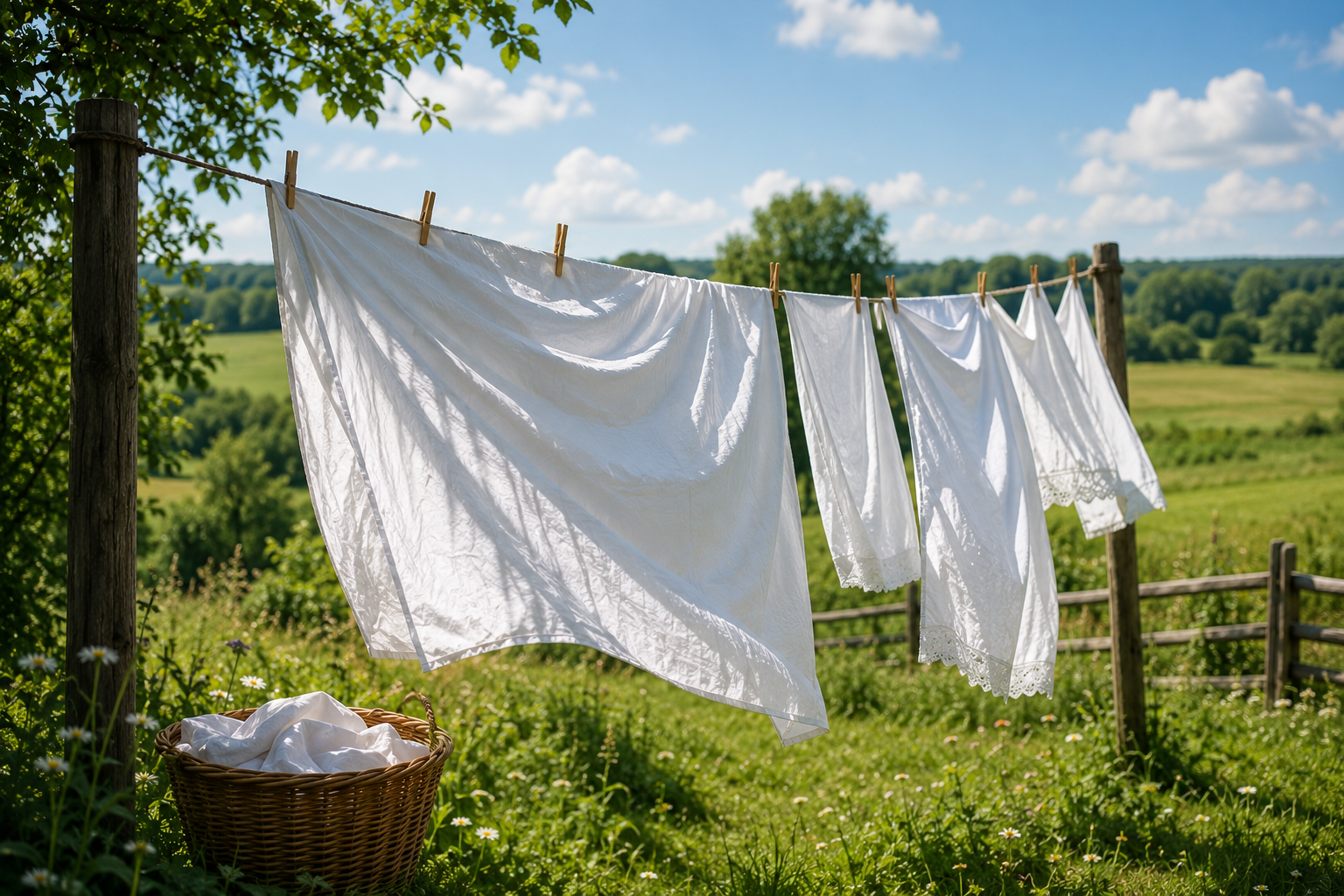
Long before scent beads and fragrance boosters, people relied on something much simpler.
Sunshine.
Fresh air.
And a clothesline.
There is something remarkable about line-dried laundry.
The scent isn't floral.
It isn't tropical.
It doesn't smell like lavender waterfalls or mountain rain.
It simply smells clean.
Many people describe sun-dried laundry as one of the freshest smells in the world.
And unlike artificial fragrances, that scent doesn't come from a chemical coating. It comes from fresh air, sunlight, and naturally clean fabric.
Sometimes the old ways still have something to teach us.
Also Read ☀️Are Microplastics Really Everywhere? What Science Says in 2026 | Shellee’s Green
The 80/20 Laundry Rule
You don't need to throw away everything in your laundry room tomorrow.
You don't need to feel guilty about products you've used for years.
Start with one simple principle:
Make the next best choice.
Finish what you have.
Learn what you're using.
Replace products thoughtfully when the time comes.
Small changes made consistently often have a bigger impact than dramatic changes made once.
The Shellee's Green Takeaway
For generations, we've been taught that softness comes from fabric softener and cleanliness comes from fragrance.
But sometimes the things we've always accepted deserve a second look.
Fabric softeners may reduce static and create a smoother feel, but they do so by coating fabrics with compounds designed to remain behind after washing. For some families, that trade-off may be worthwhile. For others, it may be the beginning of a search for simpler alternatives.
The good news is that reducing chemical overload doesn't require perfection.
It starts with awareness.
It starts with asking questions.
And sometimes, it starts with realizing that a towel should absorb water, a shirt should smell clean, and sunshine might still be one of the best laundry additives ever invented.
Also Read ☀️Less Cleaning Chemicals, Better Results | Shellee’s Green Clean
Frequently Asked Questions About Fabric Softener
1. What does fabric softener actually do?
Fabric softener doesn't actually change the fabric itself. Instead, it works by coating the fibers with lubricating compounds that reduce friction and static cling. This coating makes fabrics feel smoother and softer to the touch.
Think of it like applying conditioner to your hair. Your hair isn't becoming a different material—the coating simply changes how it feels and behaves.
The surprising part for many people is realizing that the softness comes from what is being added to the fabric, not from the fabric itself becoming naturally softer.
2. Why do towels stop absorbing water after years of fabric softener use?
If you've ever stepped out of the shower and wondered why your towel seems to push water around instead of soaking it up, you're not imagining things.
Over time, repeated applications of fabric softener can leave a residue on towel fibers. That residue can make it harder for the fibers to absorb moisture efficiently.
A simple way to think about it is this: if you coated a sponge with a thin layer of wax, it might feel smooth, but it wouldn't absorb water nearly as well.
Many people notice a dramatic improvement in towel absorbency after reducing or eliminating fabric softener and washing towels a few times without it.
3. Can fabric softener leave residue on clothing?
Yes.
In fact, leaving residue behind is exactly how fabric softener works.
The softening ingredients are designed to remain on the fabric after the wash cycle is complete. Over time, that coating can build up, especially on heavily used items such as towels, athletic wear, bedding, and everyday clothing.
Some people never notice it. Others begin to notice clothing feeling coated, less breathable, or developing a strange waxy smell after sitting in drawers or closets.
4. Why do some clothes develop a waxy smell over time?
This was one of the questions that started my own fabric softener journey.
Many people assume the smell is simply age or poor washing. But in some cases, residue buildup from fabric softeners, scent boosters, detergents, and body oils can accumulate in fabric fibers over time.
When those layers build up, clothing may hold onto odors rather than releasing them during washing.
The result can be a smell that is difficult to describe—part fragrance, part stale fabric, and sometimes almost wax-like.
Ironically, adding more fragrance products often masks the problem rather than solving it.
5. What are quaternary ammonium compounds, or "quats"?
Quats are a group of chemicals commonly used in fabric softeners to reduce static and create that smooth, soft feeling people associate with freshly washed laundry.
They work because they are attracted to fabric fibers and form a thin coating across the surface.
Some quats have been studied for potential respiratory irritation and have been identified as asthmagens, meaning they may contribute to asthma symptoms in sensitive individuals.
This doesn't mean everyone will react to them. It simply means they are one of the ingredients consumers should understand when making choices about the products they use in their homes.
6. Are fragrance ingredients required to be fully disclosed on product labels?
Not always.
In many cases, manufacturers can list "fragrance" as a single ingredient without identifying every individual compound used in the fragrance blend.
That means a product label may not tell you exactly what creates the scent you're smelling.
This doesn't automatically mean the ingredients are harmful. However, it can make it difficult for consumers who are trying to avoid certain substances, manage allergies, or reduce overall chemical exposure.
For many people, the lack of transparency is one of the reasons they begin looking for simpler alternatives.
7. Can fabric softener cause skin irritation or sensitivities?
For some people, yes.
Individuals with sensitive skin, eczema, allergies, asthma, or fragrance sensitivities may find that certain laundry products contribute to irritation.
Because fabric softener is designed to remain on fabric after washing, it continues to come into contact with your skin through clothing, sheets, towels, and pillowcases.
If you've experienced unexplained itching, irritation, or sensitivity, switching to a fragrance-free or lower-residue laundry routine may be worth discussing with a healthcare professional.
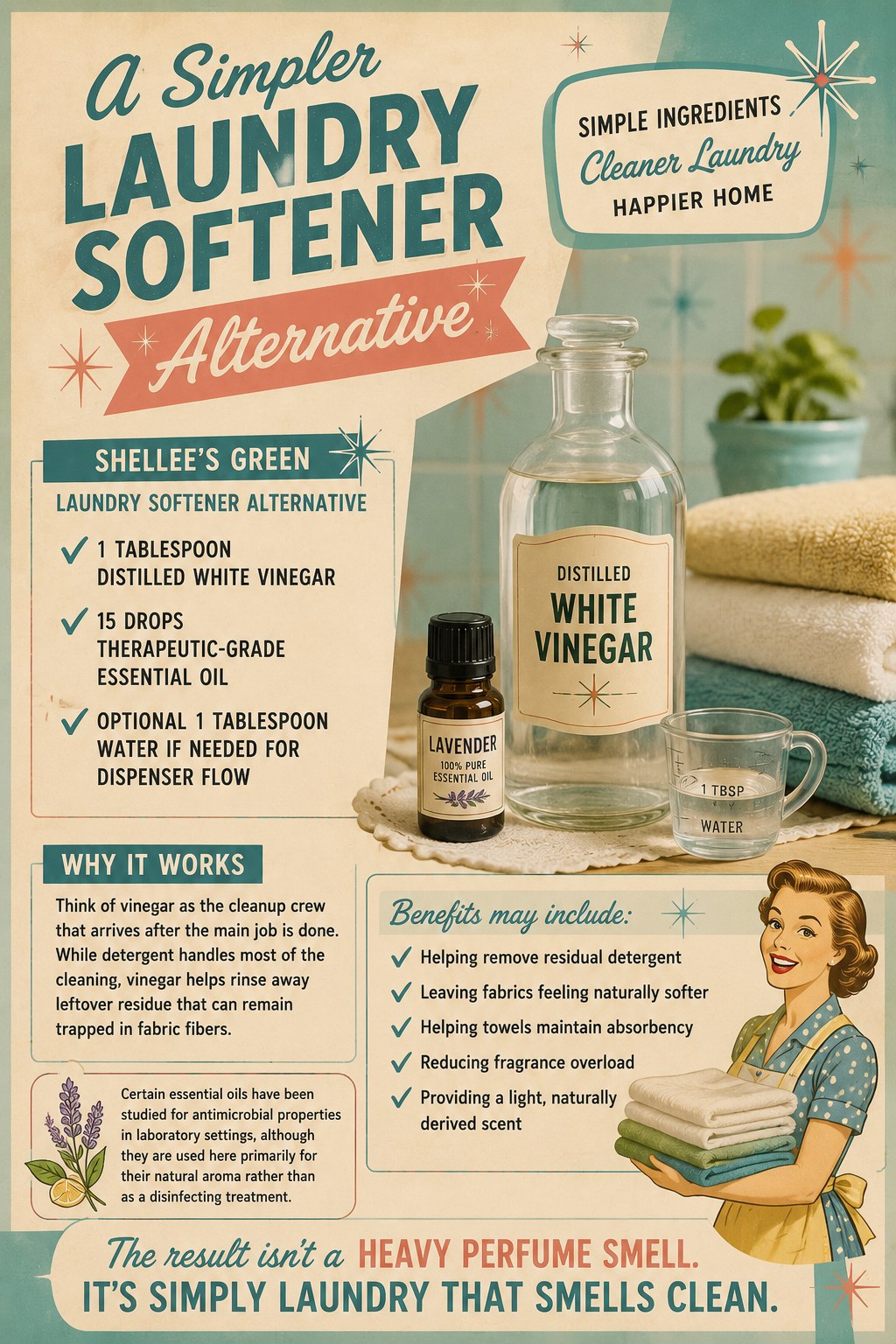
8. Is vinegar really a good alternative to fabric softener?
For many households, yes.
Distilled white vinegar has been used in laundry for generations.
Unlike fabric softener, vinegar doesn't coat fabrics. Instead, it helps rinse away leftover detergent residue that may remain trapped in fibers.
Many people find that clothing feels naturally softer, towels become more absorbent, and fabrics smell cleaner after making the switch.
The goal isn't to replace one fragrance with another.
The goal is allowing clean fabric to simply be clean.
9. Will my clothes smell like vinegar if I use it in the rinse cycle?
This is probably the question I hear most often.
The answer is usually no.
When used in the proper amount during the rinse cycle, the vinegar smell typically dissipates as the laundry dries.
What you're left with is not a vinegar scent but a much more neutral, clean-smelling fabric.
If you enjoy a light scent, adding a few drops of a quality essential oil can provide a subtle aroma without the heavy fragrance load often associated with conventional fabric softeners.
10. What's the easiest first step for reducing laundry-related chemical exposure?
Start small.
You don't need to throw away every product in your laundry room tomorrow.
One of the easiest approaches is to simply begin paying attention.
- Read labels.
- Ask questions.
- Notice how your towels perform.
- Notice how your clothes smell after they've been stored for a while.
When products run out, consider trying a simpler alternative.
At Shellee's Green, we believe healthier living isn't built through perfection. It's built through awareness, curiosity, and a willingness to make one better choice at a time.
That's how meaningful change usually happens—not overnight, but one load of laundry at a time. It's taken me years, so don't expect to change all at once.