


When Less Chemistry Does More Work
Let’s start with something most people assume is true:
If something is really dirty… you need something really strong to clean it.
More product.
Stronger product.
Maybe even a mix of products just to be safe.
It feels logical.
But in real homes—the kind where kids are leaning on counters, snacks are being set down, pets are jumping where they shouldn’t, and surfaces are cleaned every single day—that approach often creates more problems than it solves.
Because here’s the truth most homeowners never get told:
More chemicals don’t always create better results.
Sometimes they create buildup, more maintenance, and a cleaning routine that never quite works the way it should.
Where This Mindset Comes From
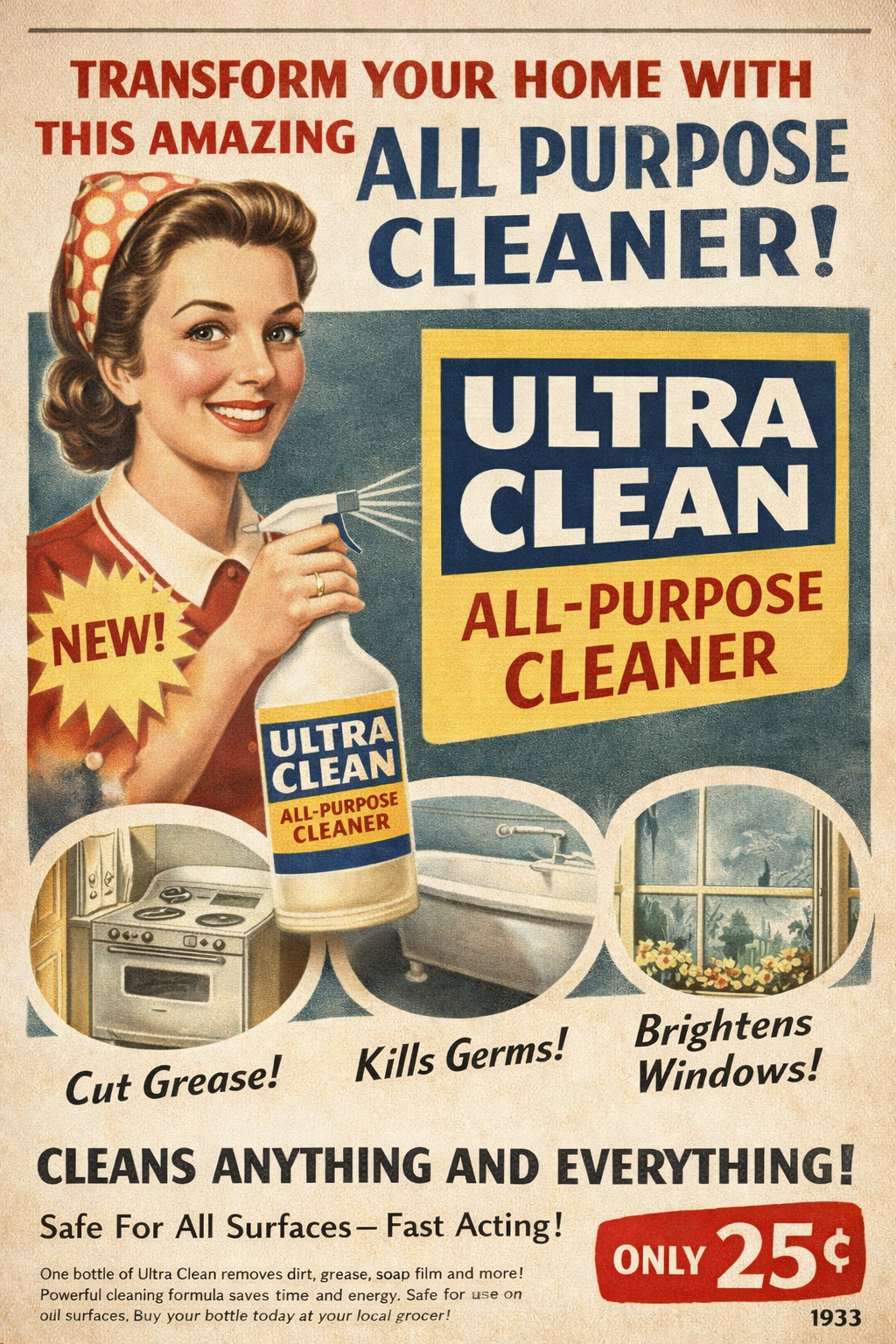
For years, cleaning has been marketed like a battle:
- tougher mess = stronger product
- more smell = more clean
- more product = deeper clean
And in certain situations, yes—stronger chemistry has its place.
But everyday home cleaning isn’t a one-time problem.
It’s repetitive. It’s layered. It happens over and over again on the same surfaces.
And that’s exactly where “more” starts to work against you.
What Actually Happens When You Use Too Much
Let’s break this down in real life—not theory.
When too much product is used—or when products are layered without fully removing what’s already there—you start to see a pattern.
At first, everything looks great.
Counters shine. Floors look clean. The house smells fresh.
But over time…
Residue Starts to Build
Even if you can’t see it, product layers begin to accumulate.
That can lead to:
- surfaces that feel slightly sticky
- dullness that doesn’t go away
- that “never quite clean” feeling
Also Read 📖The Problem With One-Size-Fits-All Cleaning Products | Shellee’s Green Clean
Surfaces Start Attracting More Dirt
This is where it gets frustrating.
That residue doesn’t just sit there—it actually makes surfaces more likely to:
- grab dust
- hold grease
- collect grime faster
So now you’re cleaning more often… not less.
You End Up in a Cycle
And this is the part most homeowners recognize immediately:
Surface doesn’t feel clean →
Use more product →
More residue →
Gets dirty faster →
Clean again →
Repeat
At some point, cleaning stops feeling effective and starts feeling like something you’re constantly trying to keep up with.
Why This Matters More Than People Think

This isn’t just about efficiency.
It’s about how your home is actually used.
Think about your kitchen counter:
- groceries get dropped there
- mail gets stacked there
- kids eat there
- arms rest there
- hands touch it constantly
Now think about what’s actually on that surface.
If your cleaning method leaves behind even a light layer of residue, that’s what everything is interacting with all day long.
Same goes for:
- dining tables
- bathroom counters
- coffee tables
- desks
- even floors
These aren’t decorative surfaces.
They’re living surfaces.
Also Read 📖https://shelleesgreenclean.com/looking-clean-vs-being-clean-shellees-green-clean/
Here’s the Shift That Changes Everything
Cleaning is not about overpowering dirt.
👉 It’s about removing it.
Once you understand that, everything starts to make more sense.
Because if a cleaning method:
- leaves something behind
- creates buildup
- requires constant re-cleaning
…it’s not actually solving the problem.
It’s managing the appearance of it.
Why Less Chemistry Works Better
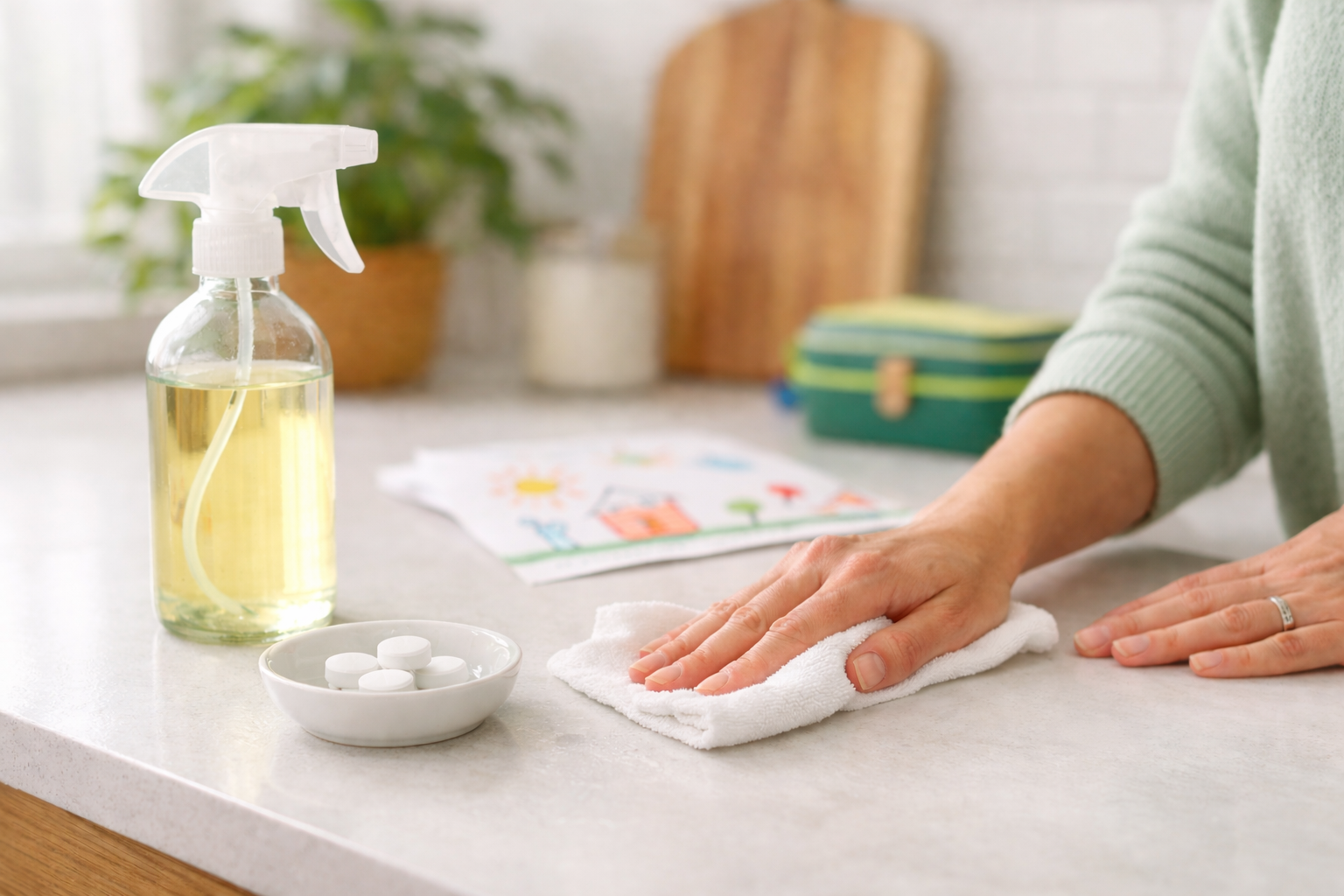
When you scale things back and focus on removal instead of intensity, a few important things happen:
- Surfaces reset instead of layering
- Dirt doesn’t cling as easily
- Results last longer
- You don’t need to keep re-cleaning the same areas
And maybe most importantly…
👉 Your home starts to feel clean—not just look clean
A Simpler Way to Think About It
Think about washing your hands.
If you kept adding soap without rinsing it away, your hands wouldn’t get cleaner.
They’d get coated.
Cleaning your home works the same way.
If you don’t fully remove what’s already there, adding more product doesn’t fix the problem.
It layers it.
Where Most Cleaning Products Fall Short
A lot of traditional products are designed for:
- quick visual results
- strong scent
- immediate shine
But they often rely on multiple ingredients working together—surfactants, fragrances, additives—that can leave something behind.
That’s where buildup starts.
And once buildup starts, everything becomes harder to maintain.
Why One Ingredient Can Outperform Many
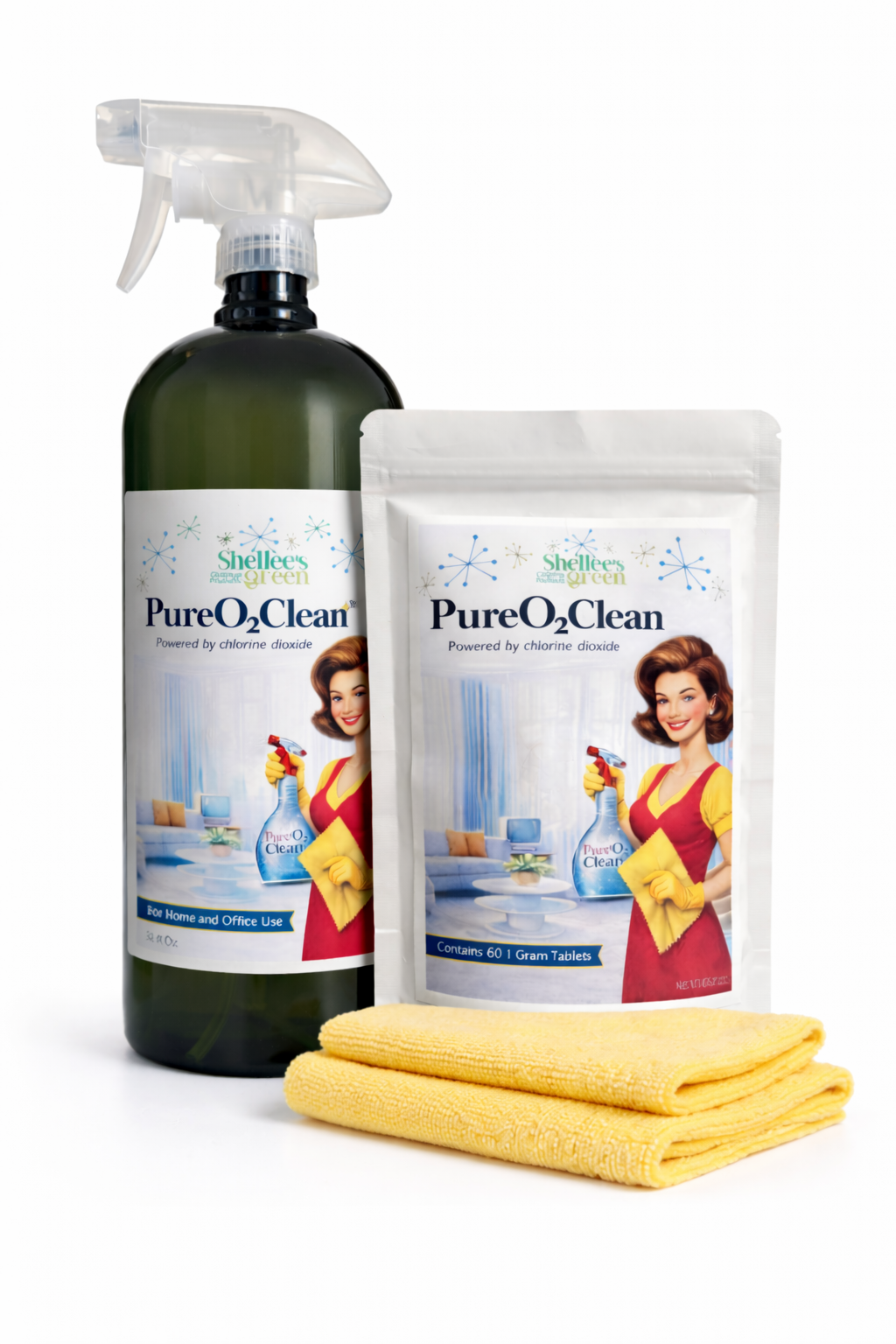
This is where things start to shift from “less” to better.
Instead of layering multiple ingredients together, imagine using something designed to do one thing extremely well:
👉 Break down what shouldn’t be there… and then disappear.
That’s where chlorine dioxide (ClO₂) comes in.
What Makes ClO₂ Different
Chlorine dioxide isn’t designed to:
- coat surfaces
- create fragrance
- leave a visible finish
Its job is simple:
👉 Break down organic contaminants at the source
That includes:
- odor-causing compounds
- organic residue
- microscopic buildup that traditional cleaning spreads or masks
Instead of layering over the problem, it interacts with it directly—and eliminates it.
What Happens After the Cleaning Is Done
This is the part most people don’t expect.
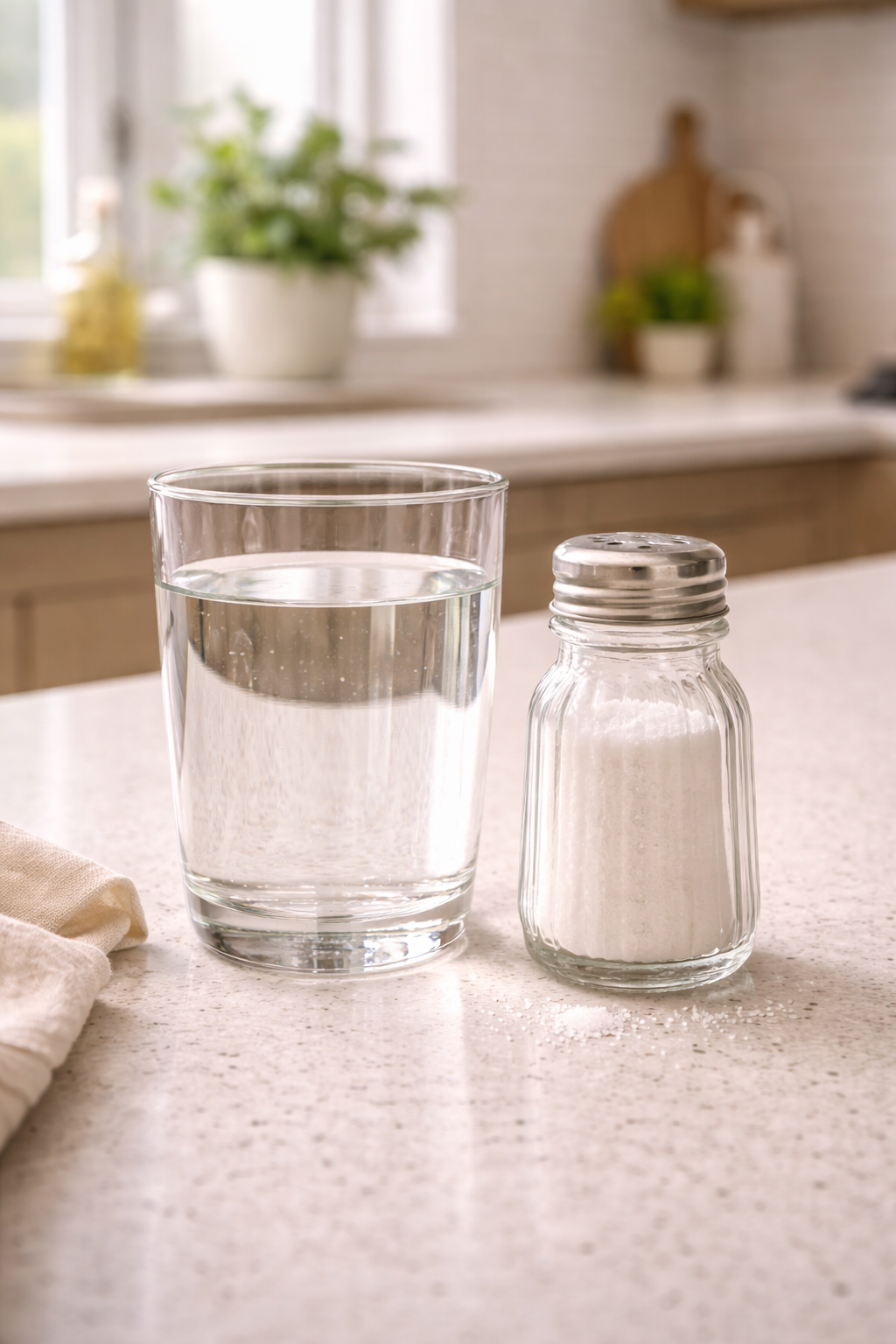
After chlorine dioxide does its job in its gaseous state, it doesn’t linger as a heavy chemical.
👉 It breaks down.
And what’s left behind is:
Salt and water (a simple saltwater byproduct)
No sticky film.
No layered residue.
No buildup cycle.
Just a surface that’s been reset.
Why This Changes Everything
When you use:
- fewer ingredients
- targeted chemistry
- and a process that fully dissipates
You eliminate the biggest frustrations homeowners deal with:
- buildup
- re-soiling
- constant re-cleaning
- surfaces that never quite feel clean
This is what “less chemistry does more work” actually looks like.
Not weaker.
Not less effective.
👉 More precise. More complete. More efficient.
What Homeowners Notice First

When people experience this kind of cleaning, they usually notice:
- surfaces don’t feel sticky
- cleaning lasts longer
- there’s no heavy scent hanging in the air
- the home feels naturally fresh
It’s subtle—but it’s real.
And once you notice it, it’s hard to go back.
The Real Win: Less Work, Better Results
This is what most homeowners actually want:
- a home that stays clean longer
- less time spent re-cleaning
- surfaces that feel right—not coated
And that doesn’t come from doing more.
It comes from doing less… better.
Something To Think About
Cleaning isn’t about intensity.
It’s about effectiveness.
More chemicals don’t automatically create better results.
Sometimes they create the exact problems you’re trying to solve.
So if your cleaning routine feels like:
- it takes too much effort
- doesn’t last
- or never quite feels right
…it might not be that you need more.
👉 It might be that you need less.
Less buildup.
Less layering.
Less guesswork.
And a smarter way to clean.
10 FAQs
1. Does using more cleaning product make surfaces cleaner?
Not always. Using too much cleaning product can leave residue behind, which can attract more dirt and make surfaces harder to maintain over time.
2. Why do my floors feel sticky after mopping?
Sticky floors are often caused by leftover cleaning solution that was not fully removed. That residue can build up and leave floors feeling tacky instead of truly clean.
3. Can too much cleaner cause buildup on counters and tables?
Yes. Repeated use of excess product can create a film on surfaces, especially in kitchens and bathrooms, making them look dull or feel coated over time.
4. Why do surfaces get dirty again so quickly after cleaning?
When a cleaner leaves residue behind, that residue can attract dust, crumbs, grease, and everyday grime faster, causing surfaces to re-soil more quickly.
5. Is it better to use less cleaning product in everyday home cleaning?
In many cases, yes. Using the right amount and focusing on proper removal often creates better, longer-lasting results than overusing product.
6. What is chlorine dioxide (ClO₂) used for in home cleaning?
Chlorine dioxide is used to break down organic contaminants at the source rather than masking them. It is especially useful for odor-causing compounds and organic residue.
7. Does chlorine dioxide leave residue behind on surfaces?
No. After chlorine dioxide does its job in its gaseous phase and dissipates, it does not leave behind the kind of sticky or filmy residue that many traditional cleaning products can create.
8. What is left behind after chlorine dioxide is used?
After the cleaning phase has dissipated, chlorine dioxide breaks down into a simple saltwater byproduct. That means there is no heavy chemical layer left on the surface.
9. Why is one-ingredient cleaning sometimes more effective?
A single targeted ingredient can reduce the chance of buildup and residue because it is focused on solving the problem directly instead of layering multiple ingredients onto the surface.
10. What makes low-chemistry cleaning more effective for families?
Low-chemistry cleaning can leave behind less residue on the surfaces families touch every day, like counters, tables, and bathroom vanities. That means a cleaner-feeling home with less buildup and less constant re-cleaning.