


A few years ago, if someone told you they were cleaning their kitchen counters with bacteria… you probably would have stared at them like they had completely lost their mind.
Because for decades, we were taught one thing:
👉 Bacteria are bad.
Kill them. Eliminate them. Disinfect everything.
Then suddenly, almost overnight, the conversation changed.
Now social media is filled with people talking about:
- “healthy home microbiomes”
- probiotic cleaning sprays
- balancing bacteria
- avoiding over-sanitizing
And if you’ve spent even five minutes scrolling through cleaning trends lately, you’ve probably seen someone proudly spraying “good bacteria” all over their countertops like they’re watering houseplants.
At first glance, it sounds strange. Maybe even a little unsettling.
And honestly?
That reaction is perfectly reasonable.
Most homeowners aren’t scientists. They’re just trying to keep their homes:
- clean
- healthy
- odor-free
- safe for their families
So when a trend suddenly says:
“Actually… maybe add bacteria to your home…”
…it naturally raises some questions.
And that’s exactly what we’re going to talk about.
Because while probiotic cleaners are becoming one of the fastest-growing trends in green cleaning and wellness spaces, there’s also a lot of confusion surrounding what they actually do—and whether they’re really necessary in the average home.
🧫 What Are Probiotic Cleaners?
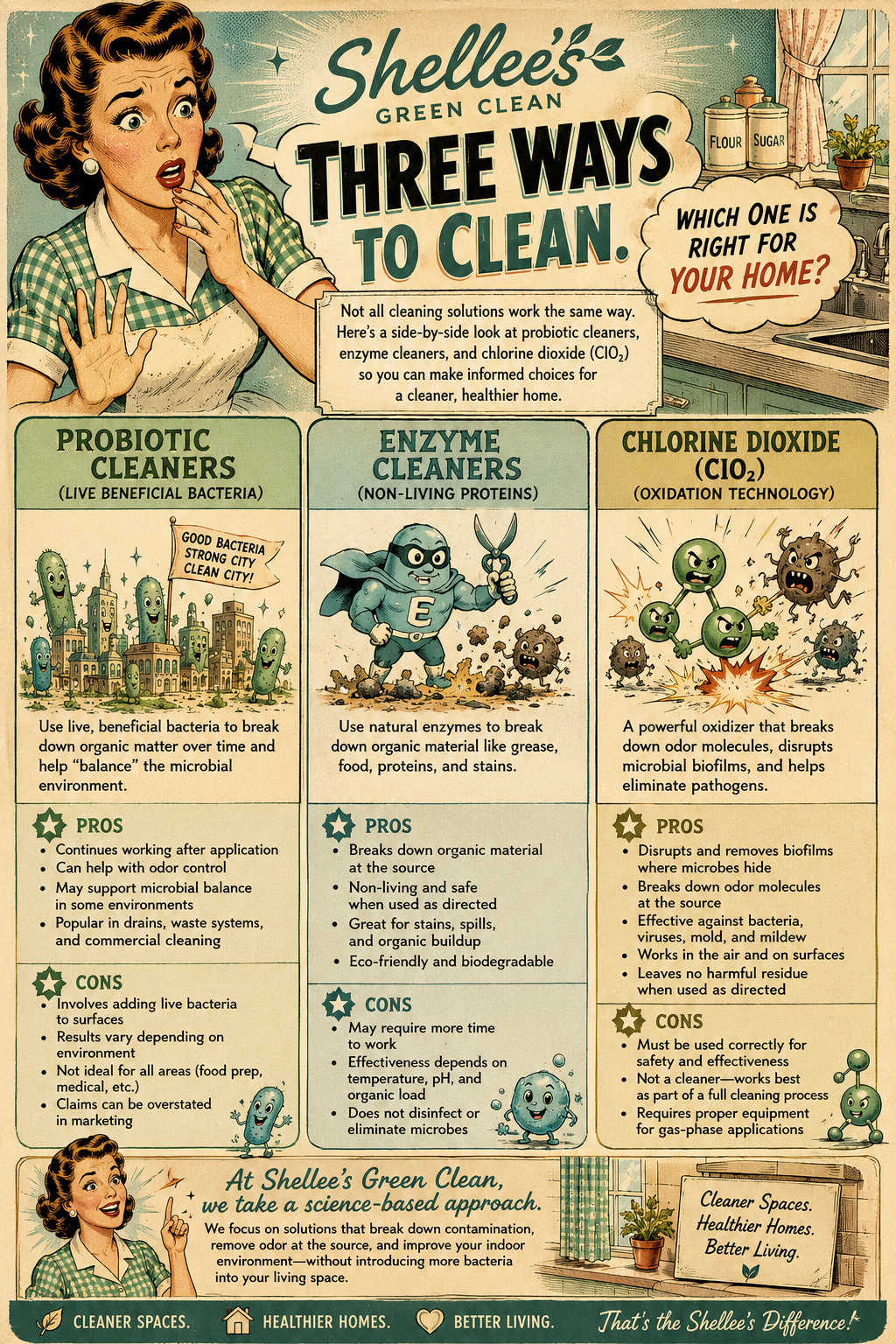
Probiotic cleaners contain live beneficial bacteria designed to break down organic material over time.
Instead of relying only on traditional chemical cleaning agents, these products use carefully selected bacteria strains to consume things like:
- grease
- food residue
- organic buildup
- odor-causing waste
The idea is that these “good bacteria” continue working after the surface has been cleaned.
Some companies market probiotic cleaners as a way to:
- balance the home microbiome
- reduce harsh chemical use
- improve odor control naturally
- create healthier indoor environments
And to be fair—there is legitimate science behind microbial competition and biological breakdown.
But this is also where the conversation starts getting complicated.
🤔 Why Some People Love Them
There’s a reason probiotic cleaners are becoming trendy.
People are actively searching for:
- healthier homes
- lower chemical exposure
- gentler cleaning methods
- better indoor air quality
After years of ultra-harsh disinfecting and “kill everything” marketing, many homeowners are starting to question whether constantly blasting every surface with aggressive chemicals is really the best long-term approach.
And in some applications, probiotic cleaning systems can be genuinely useful—especially in:
- drains
- grease traps
- odor control systems
- commercial floor care
- waste management environments
Because bacteria are naturally very good at digesting organic matter over time.
⚠️ …But Not Everyone Is Comfortable With The Idea
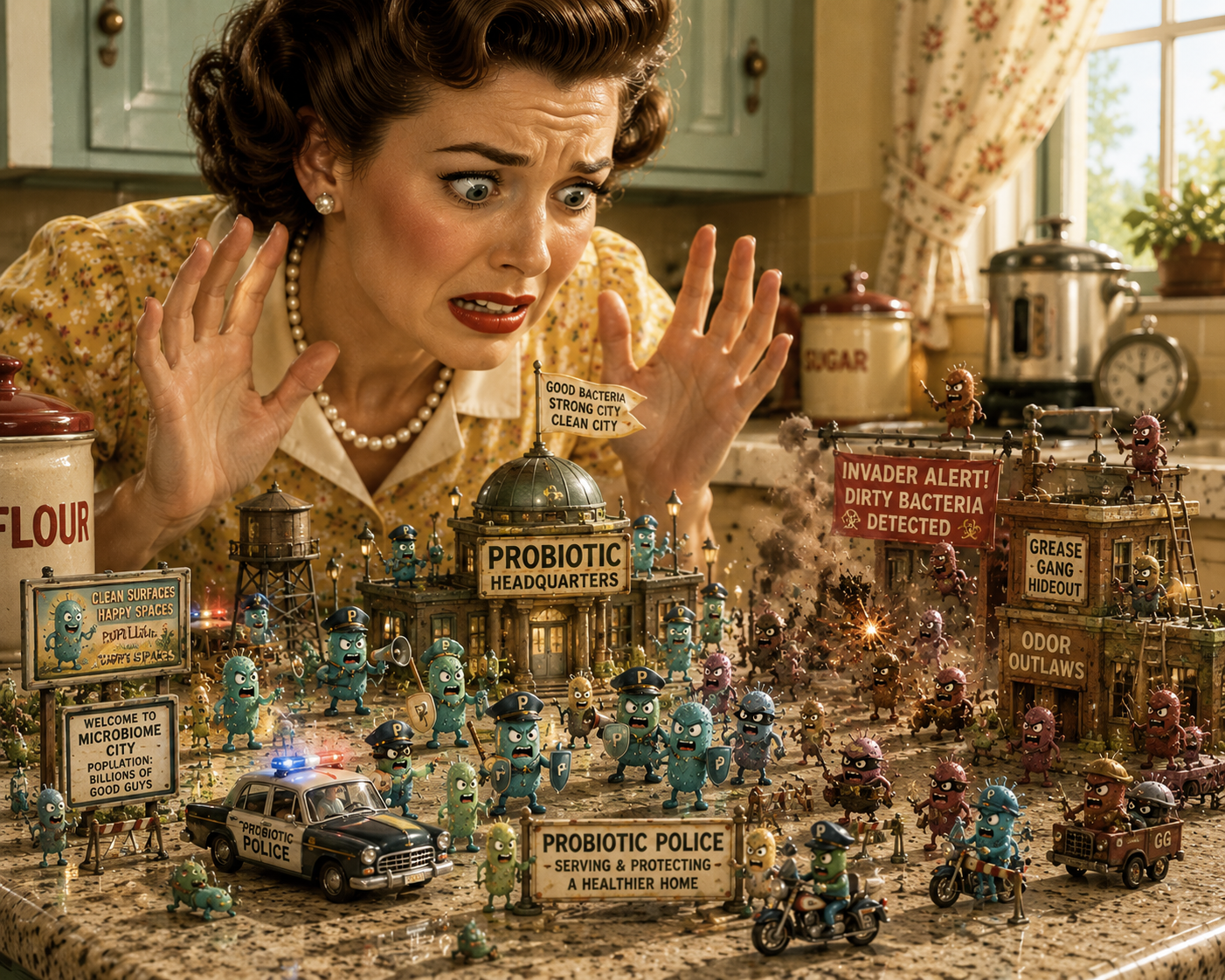
Here’s where many homeowners pause.
Even if the bacteria used are considered non-pathogenic and carefully selected…
👉 the idea of intentionally applying bacteria to surfaces still feels strange to many people.
Especially in:
- kitchens
- bathrooms
- homes with children
- food preparation areas
And honestly?
That hesitation makes sense.
The average person has spent their entire life hearing:
“Bacteria are dangerous.”
So hearing:
“Actually, spray more bacteria around your house…”
…can feel like a hard mental pivot.
That doesn’t mean probiotic cleaners are automatically bad.
But it does mean consumers should understand what they’re using instead of simply following trends because they sound modern or wellness-focused.
🧪 At Shellee’s Green Clean, We Take a Different Approach
At Shellee’s, we believe cleaning should make sense—not just follow whatever trend is exploding online this month.
That’s why we focus on technologies and products designed to:
- break down contamination
- improve indoor environments
- eliminate odor sources
- support cleaner living spaces
…without intentionally introducing living bacteria into the home environment.
Instead, we lean toward science-backed approaches like:
✅ enzyme technology
✅ chlorine dioxide treatment systems
✅ source-removal cleaning methods
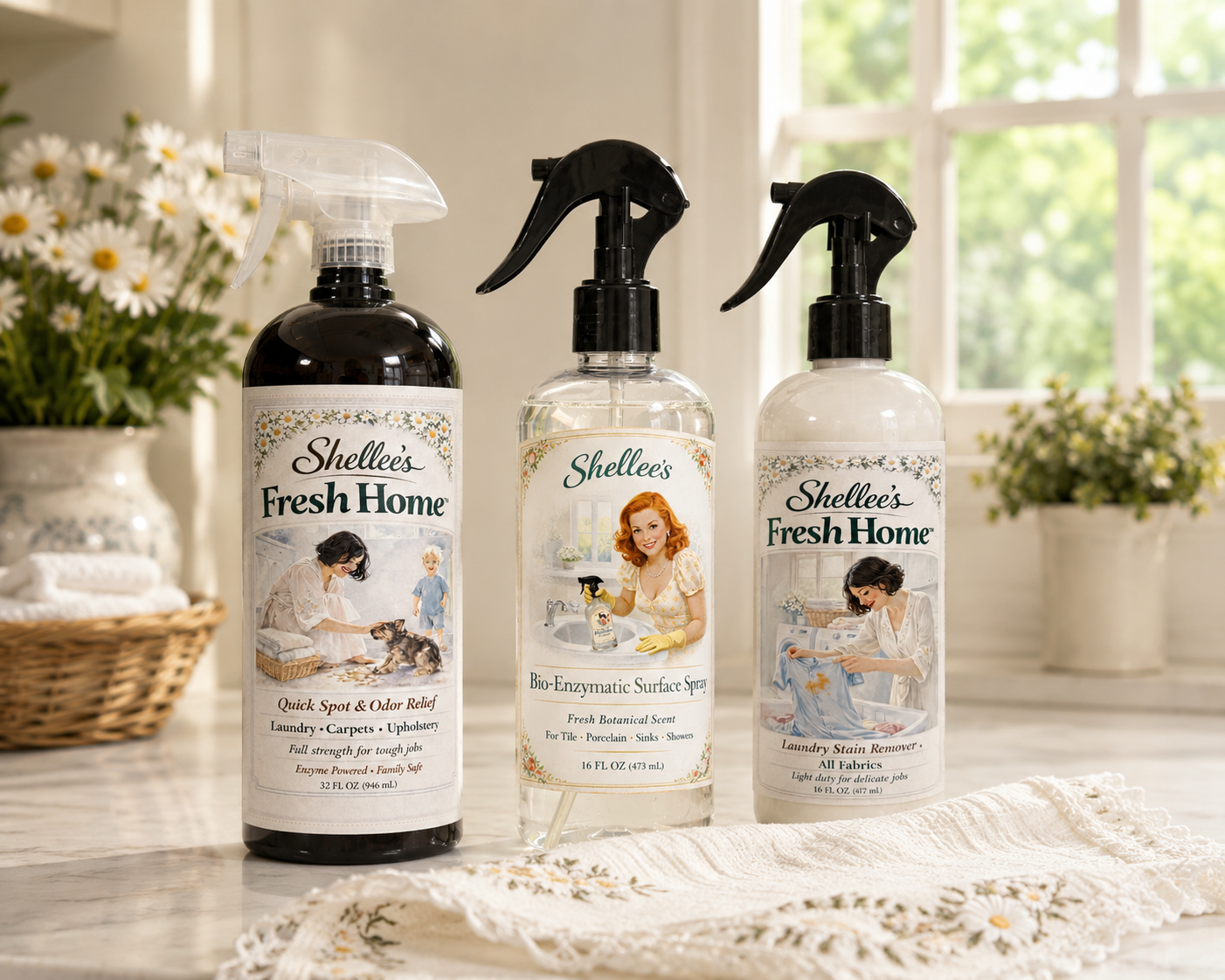
🔬 What Are Enzyme Cleaners?
Enzyme cleaners are often confused with probiotic cleaners, but they’re actually very different.
Enzymes are not living organisms.
They’re proteins that work like microscopic scissors—breaking apart organic material into smaller particles that can be more easily removed.
They’re especially effective for:
-
-
-
-
- pet accidents
-
-
-
- grease
- food residue
- organic odors
- buildup in porous materials
Instead of adding bacteria to surfaces, enzyme cleaners help dismantle the material causing the problem in the first place.
At Shellee’s Green Clean, we use and recommend enzyme-based products because they help target the source of buildup naturally and effectively.
Also Read📖 The Science of Odor Elimination: What Freshener Companies Don’t Want You to Know
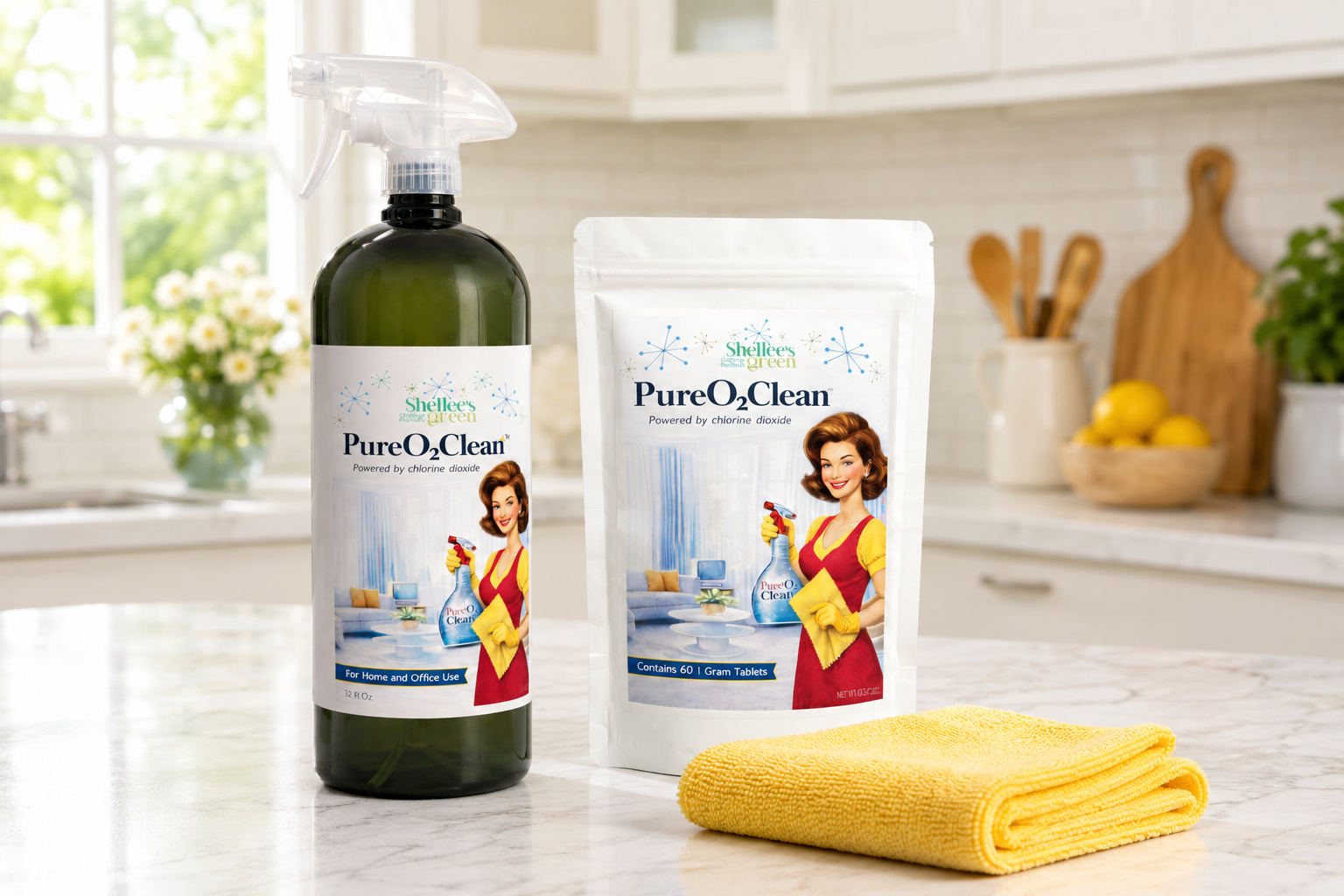
🟢 What Makes Chlorine Dioxide Different?
One of the technologies we use is chlorine dioxide (ClO₂), which works very differently from both traditional disinfectants and probiotic cleaners.
Rather than masking odors or coating surfaces, chlorine dioxide works through a process called oxidation.
This process helps break down:
- odor molecules
- organic contamination
- microbial biofilms
🧬 What Is a Biofilm?
Biofilms are protective layers created by microbes to help themselves survive.
Think of them like microscopic armor.
Inside these slimy protective layers, bacteria can continue producing:
- odors
- contamination
- buildup
…and they can become extremely difficult to fully remove with surface-level cleaning alone.
Chlorine dioxide helps disrupt these biofilms at the molecular level, allowing the contamination and odor sources to break down more effectively.
That’s one reason it has become such a valuable tool in:
- odor remediation
- environmental cleaning
- restoration work
- indoor air quality support
Also Read 📖 A Guide to Cleaning with CLO₂ | Safe, Family‑Friendly Green Cleaning
🌿 So… Are Probiotic Cleaners Good or Bad?
Honestly?
The answer is probably somewhere in the middle.
Some homeowners love them.
Some professionals swear by them in specific applications.
Others remain skeptical.
And that’s okay.
At Shellee’s Green Clean, we believe informed decisions are better than trendy decisions.
We’re not interested in hype.
We’re interested in what works.
For us, that means focusing on:
- breaking down contamination
- improving indoor environments
- reducing unnecessary chemical overload
- supporting healthier spaces through practical cleaning science
Not because it’s trendy…
…but because it makes sense.
🌬️ Final Thoughts
The world of cleaning is changing fast.
People are becoming more aware of:
- indoor air quality
- chemical exposure
- environmental wellness
- healthier home habits
And honestly?
That’s a good thing.
But sometimes the smartest approach isn’t about jumping to extremes.
Sometimes it’s simply:
- understanding the science
- using the right tools
- keeping things balanced
- and creating a home that genuinely feels clean, fresh, and healthy
No hype required and ultimately in the end, it's what makes you feel comfortable.
10 FAQs
1. What are probiotic cleaners?
Probiotic cleaners are cleaning products that contain live beneficial bacteria designed to help break down organic matter over time.
2. Are probiotic cleaners the same as enzyme cleaners?
No. Probiotic cleaners use live bacteria, while enzyme cleaners use non-living proteins that break down organic material like food residue, grease, stains, and odors.
3. Why are probiotic cleaners becoming popular?
They are trending because many homeowners are looking for lower-tox cleaning options, healthier indoor environments, and alternatives to harsh chemical-heavy cleaning routines.
4. Are probiotic cleaners safe to use in the home?
Many are marketed as safe when used as directed, but some homeowners are uncomfortable with the idea of intentionally applying live bacteria to household surfaces.
5. Do probiotic cleaners disinfect surfaces?
Most probiotic cleaners are not disinfectants. They are generally designed for organic breakdown and odor control, not for disinfecting or sanitizing.
6. What are enzyme cleaners best used for?
Enzyme cleaners are especially useful for organic messes such as food spills, grease, pet accidents, protein stains, and odor-causing buildup.
7. What is chlorine dioxide?
Chlorine dioxide, or ClO₂, is an oxidation-based technology that helps break down odor molecules, organic contamination, and microbial biofilms.
8. What is a biofilm?
A biofilm is a protective layer created by microbes that can make bacteria and odor-causing buildup harder to remove with surface-level cleaning alone.
9. Does Shellee’s Green Clean use probiotic cleaners?
Shellee’s Green Clean does not sell probiotic cleaners. Shellee’s focuses on enzyme-based products and chlorine dioxide technology to help break down contamination and odor sources without introducing live bacteria into the home.
10. Which cleaning approach is best for a healthy home?
The best approach depends on the problem. Enzymes are useful for organic buildup, chlorine dioxide can help with odor and biofilm disruption, and regular cleaning habits help maintain a fresher indoor environment.