


There was a time when “fresh air” wasn’t a trend—it was just how people lived.
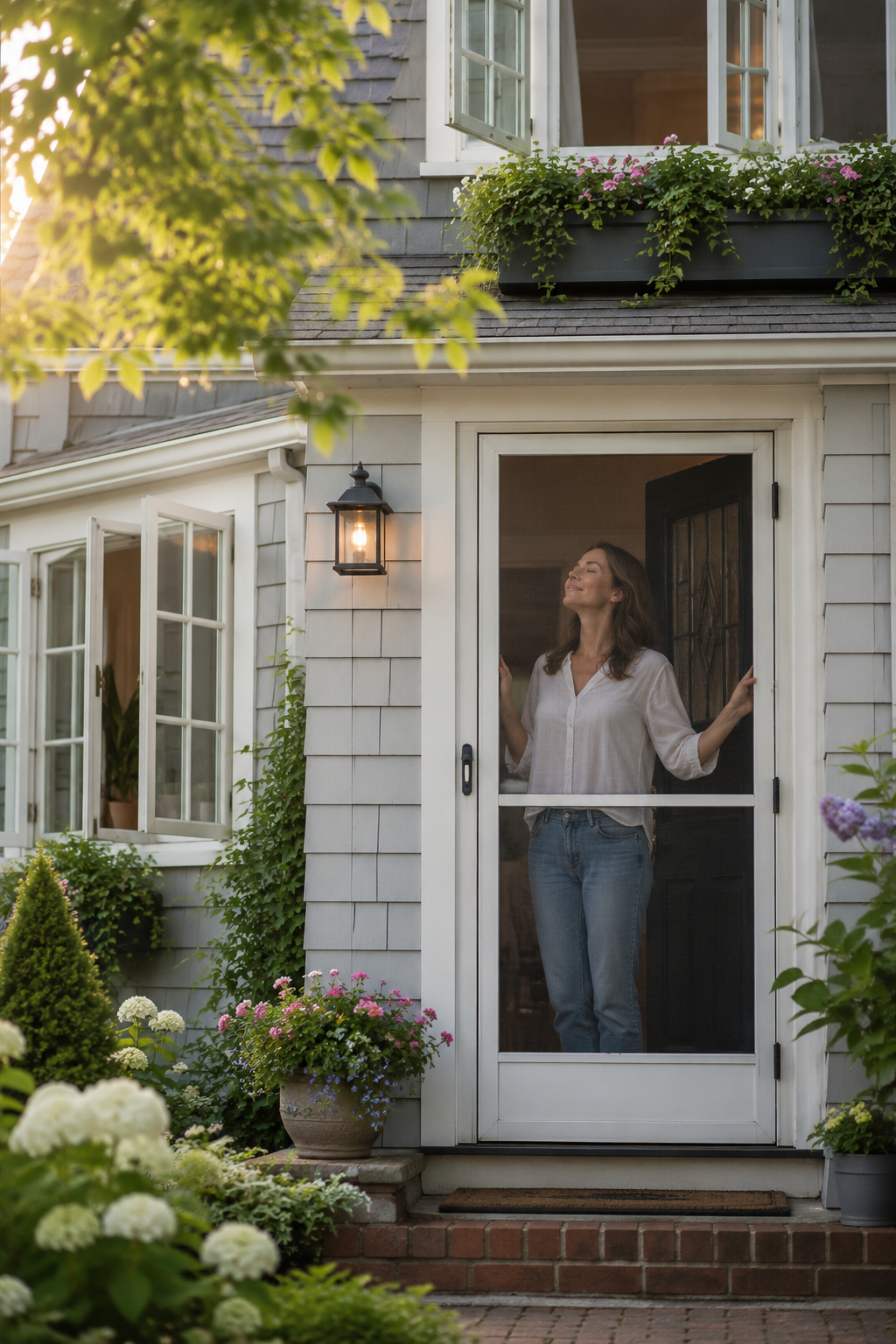
Mornings started with windows opening wide, letting in that cool, crisp air. And they stayed open most of the day—until the damp evening dew rolled in and it was time to close them up again. That simple habit was just part of keeping a home feeling clean, comfortable, and—whether people realized it or not—healthier.
Back then, homes weren’t sealed tight. Air moved freely. Kitchens smelled like last night’s dinner for a little while… and then it disappeared. Kids ran in and out, bringing in a little dirt, a little pollen, a little life—and somehow, people didn’t seem to get sick nearly as often as you’d expect.
In the house my sister and I grew up in, “airing out the house” was just something you did. Even in the winter, windows went up once a week for 10–15 minutes to let the “bad air” out. And once spring hit—once those temperatures climbed into the 50s—the windows stayed open until fall. That was just normal.
And you know what? We were healthy kids. Rarely sick. The house always felt fresh, even without all the products, sprays, and systems we rely on today.
Somewhere along the way, things shifted.
We started worrying about dust, pollen, outdoor pollutants. Homes became tighter, more sealed. Windows got painted shut. Air conditioners replaced the cool evening breeze. And slowly, without really thinking about it, we stopped letting our homes breathe.
Now suddenly, the idea is coming back around—rebranded as something new.
They’re calling it “house burping.”
Open your windows. Let the air flow. Push the stale air out. Bring the fresh air in.
And honestly?
It is a brilliant idea.
Not new—but definitely something worth bringing back.
🌬️ What Is “House Burping”?
“House burping” is simply the practice of opening windows and doors to flush out stale indoor air and bring in fresh outdoor air.
It’s being talked about as a way to:
- Reduce indoor pollutants
- Improve air quality
- Eliminate lingering odors
And while that’s all true… it’s only part of the picture.
🧪 Your Indoor Air Might Be Worse Than You Think
Modern homes are built to be energy efficient—which also means they’re sealed tighter than ever before.
That creates a hidden problem:
👉 Contaminants get trapped inside.
Common sources of indoor air pollution include:
- Cleaning products and chemical residues
- Cooking fumes and grease particles
- Pet dander and organic buildup
- Moisture leading to mold or mildew
- Furniture and materials releasing VOCs (off-gassing)
Over time, these don’t just disappear… they accumulate and linger.
🧠 Cleaning vs Air Quality — The Missing Link
Most people think cleaning is about what they can see:
- Wiping surfaces
- Scrubbing bathrooms
- Vacuuming floors
But here’s the truth:
👉 You can have spotless surfaces and still have contaminated air.
That’s because:
- Particles become airborne
- Odors embed into materials
- Bacteria can continue producing smells over time
So even after cleaning, your environment may still feel “off”—and now you know why.
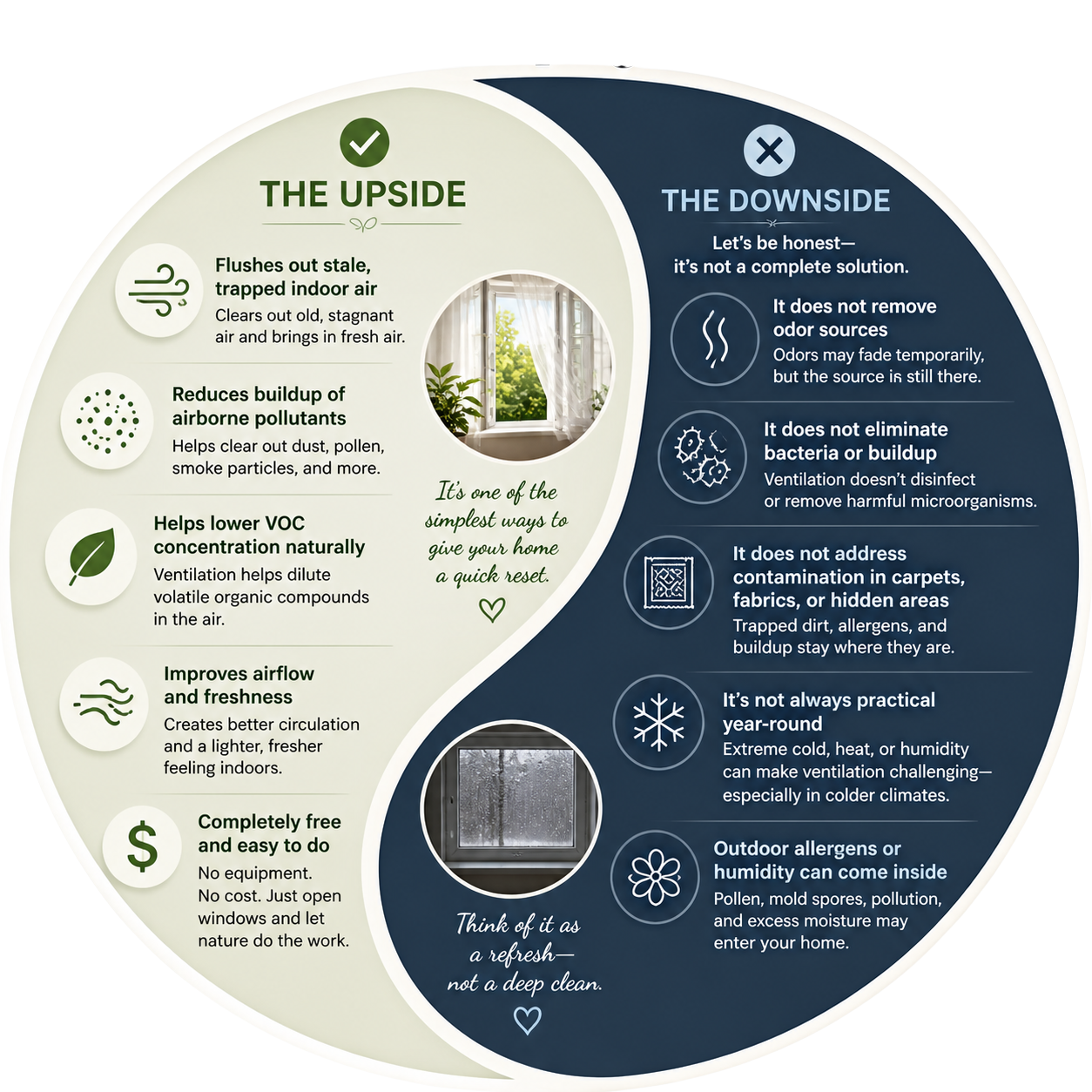
Does House "BURPING" Actually Work?
🏙️ What If You Live in a City?
Not everyone has the luxury of “perfect fresh air.”
If you’re in a city or high-traffic area:
- Outdoor air may carry pollutants
- Pollen, humidity, or dust may be concerns
Smart Ways to Still Benefit:
- Open windows during low-traffic times (early morning or late evening)
- Use short bursts (10–15 minutes) instead of leaving them open all day
- Create cross-ventilation by opening windows on opposite sides
- Combine with indoor air support if needed
👉 You can still “burp” your home—you just need to be a little more intentional.
🏠 Why This Matters More Today Than Ever
Homes weren’t always airtight.
In fact, it’s only within the last couple decades that:
- Insulation improved
- Energy efficiency became a priority
- Air exchange was reduced
While that helps control temperature…
It also means:
- Moisture gets trapped
- Odors linger longer
- Air doesn’t circulate naturally
- Indoor environments hold onto contaminants
👉 Modern homes are great at saving energy—but not always great at refreshing air.
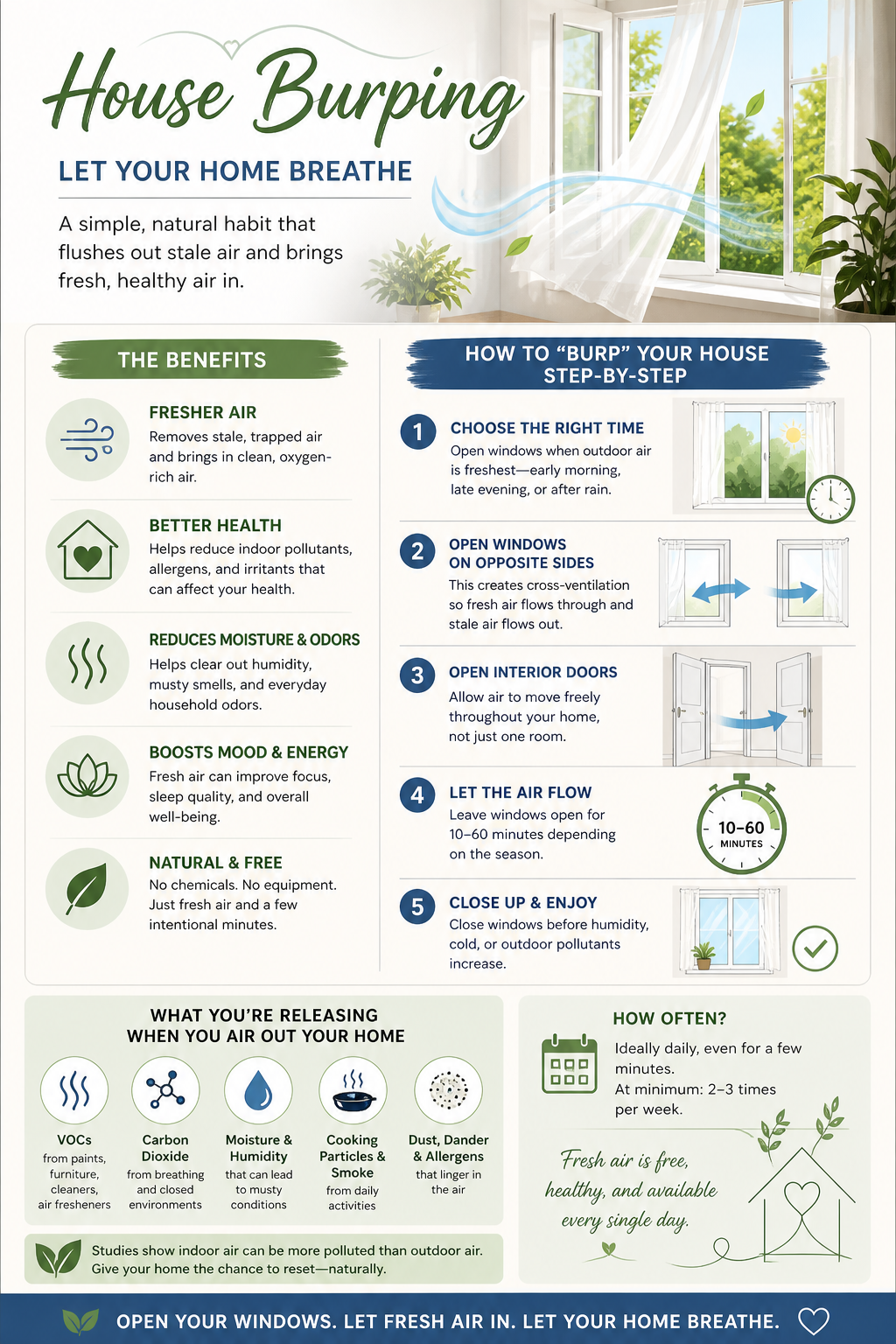
🪟 How To Properly Air Out Your Home (Step-by-Step)
🕒 How Often?
- Ideally daily, even for a few minutes
- At minimum: 2–3 times per week
⏱️ How Long?
- Mild weather: 20–60 minutes
- Cold weather: 10–15 minutes
- Hot or humid conditions: shorter, controlled airflow
🔄 How To Do It Right:
- Open windows on opposite sides of your home
- Open interior doors to allow airflow
- Let the air move—not just sit
- Avoid peak humidity or extreme weather times
- Close up before conditions shift
💡 Pro Tip:
It’s not just about opening a window…
👉 It’s about moving stale air out and replacing it with fresh air.
🔬 What Happens When You Air Out Your Home? (What You’re Actually Releasing)
When you open your windows and let fresh air move through your home, you’re not just “getting a breeze.”
👉 You’re actively pushing out a buildup of things you can’t always see—but your body still reacts to.
Inside every home, everyday living creates a mix of airborne compounds, including:
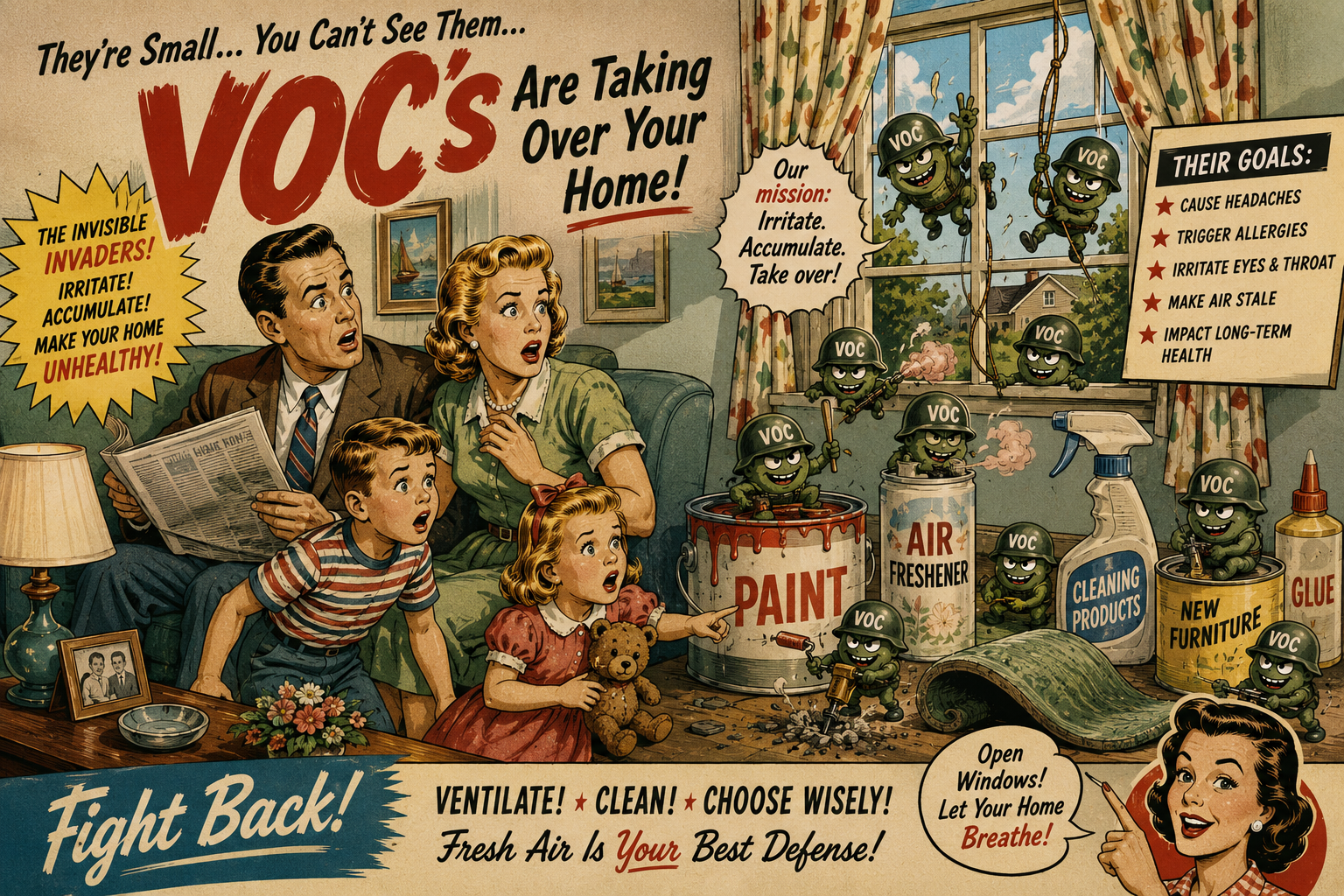
- VOCs (Volatile Organic Compounds) from cleaning products, furniture, paints, and even air fresheners
- Carbon dioxide buildup from breathing and closed environments
- Moisture and humidity, which can lead to that heavy, stale feeling
- Cooking particles and indoor smoke residue
- Microscopic dust and allergens that linger in the air
💡 So What Are VOCs, Really?
VOCs are gases released from common household items—things like:
- Cabinets and flooring
- Upholstery and mattresses
- Cleaning products and scented sprays
- Paints, sealants, and adhesives
In a tightly sealed home, these compounds don’t have anywhere to go… so they build up over time.
🧠 Real-Life Example
Think about this:
You clean your kitchen, everything looks spotless, and maybe you even use a product that leaves behind a “fresh scent.”
But then:
- You cook dinner
- The dishwasher runs
- The trash goes out
- Everyone settles in for the evening
Now imagine all of that happening in a home where the windows never open.
👉 Those invisible compounds—moisture, gases, and particles—just stay there, circulating over and over again.
By morning, the house might not look dirty…
…but the air feels heavier. Stale. Slightly off.
That’s what you’re releasing when you open your windows.
🌿 Final Thought
This is why something as simple as opening your windows can make such a noticeable difference.
You’re not just letting fresh air in—
👉 you’re giving everything inside your home a chance to reset.
There’s something refreshing about realizing that not everything needs to be complicated.
Not every solution comes in a bottle.
Not every “clean” requires chemicals, tools, or money.
Sometimes…
👉 it’s as simple as opening a window.
Letting your home breathe.
Letting fresh air in.
Letting the old air out.
Healthy cleaning doesn’t always cost anything.
And the best part?
It’s available to you… every single day, and it's FREE!
❓ FAQs
1. Is indoor air really more polluted than outdoor air?
Yes, in many cases indoor air can be more concentrated with pollutants due to limited ventilation and trapped contaminants.
2. How often should I air out my home?
Opening windows periodically can help, but it should be combined with proper cleaning and source removal.
3. Does opening windows remove odors permanently?
No, it only temporarily reduces airborne odors without eliminating the source.
4. What causes stale indoor air?
Trapped pollutants, lack of airflow, moisture, and buildup of organic materials all contribute.
5. Can cleaning products affect air quality?
Yes, some products release chemicals and VOCs that impact indoor air.
6. Why does my house smell after cleaning?
The source of the odor may still be present in materials like carpet, furniture, or hidden areas.
7. Do air purifiers solve odor problems?
They can help with particles but don’t eliminate odor sources.
8. What’s the best way to improve indoor air quality?
A combination of source removal, proper cleaning, and air treatment.
9. Is ventilation enough to remove bacteria?
No, bacteria must be physically removed or neutralized at the source.
10. What’s the difference between masking and removing odors?
Masking covers the smell temporarily, while removal eliminates the source causing it.