


What Labels Don’t Tell You About Everyday Cleaning Products
Let’s Be Honest for a Second…
Most of us don’t spend a lot of time reading cleaning labels—we just want something that works.
So we grab what sounds good:
“Fresh scent.”
“Powerful clean.”
“Natural.”
“Green.”
And we trust that if it’s on the shelf, it must be doing the job the right way.
But here’s the part most homeowners don’t realize until much later:
Cleaning labels are built to sell confidence—not to explain outcomes.
And there’s a pretty big gap between those two things.
What Labels Focus On (And Why That’s Misleading)
When you look at a typical cleaning product, the label is designed to highlight things that feel reassuring:
- Pleasant scents
- Words like “safe,” “gentle,” or “powerful”
- Visual cues like leaves, water drops, or bright kitchens
What you rarely see explained clearly is:
- What happens after the product dries
- Whether anything is left behind
- How repeated use affects your surfaces
- How it behaves over weeks or months of regular cleaning
That’s not an accident. Those details are harder to explain—and honestly, they don’t sell as well.
The Part Nobody Talks About: Residue
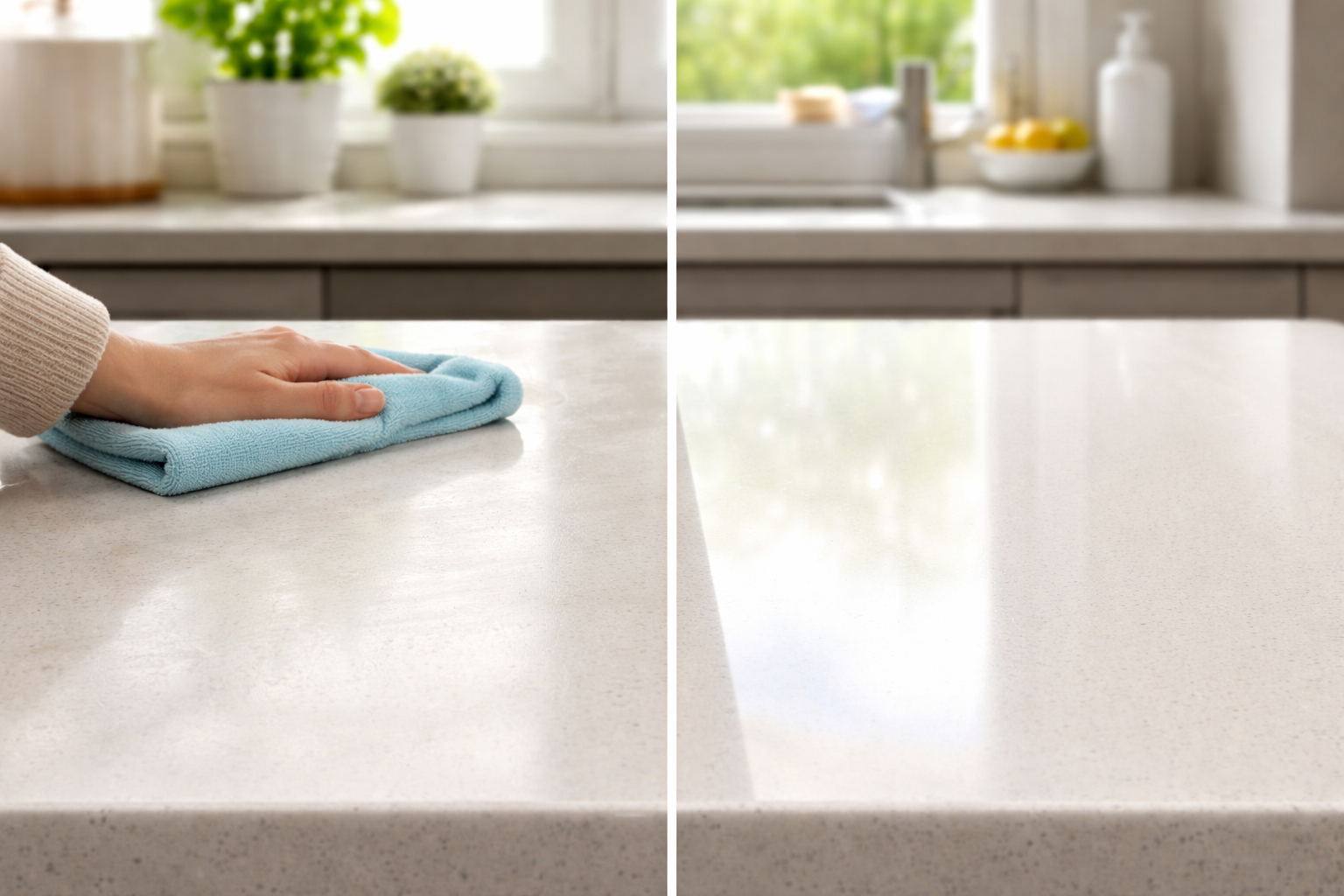
Let’s talk about something that almost never shows up on a label: residue.
Ever cleaned something with that NEW cleaner that smells like everything you want you house to smell like, to only find it leaves surfaces sticky for days? Yeah, so have I......
A lot of cleaning products—especially the ones designed to create shine or fragrance—leave behind a microscopic layer after you wipe them away.
You might not see it right away, but over time you start to notice things like:
- Counters that feel slightly tacky
- Floors that look dull even after cleaning
- Surfaces that seem to attract dust faster
That’s not because your home is getting dirtier.
It’s because you’re slowly building up layers of product.
And once that buildup starts, you’re stuck in a cycle: 👉 Clean → residue → attracts dirt → clean again → more residue
Why “Smells Clean” Isn’t the Same as “Is Clean”
This one is big.
We’ve been trained to associate smell with cleanliness:
- Lemon = clean
- Lavender = fresh
- “No smell” = maybe not working
But in reality, scent is just a signal—not proof of anything.
In many cases, strong fragrances are doing one of two things:
- Masking underlying odors
- Lingering long after the cleaning is done
Neither of those actually tells you whether the surface itself is truly clean.
In fact, some of the cleanest environments have very little scent at all—because there’s nothing left behind to create one.
The Truth About “Green” and “Natural” Labels
Now let’s address the elephant in the room.
A lot of homeowners assume that if something says:
- “Green”
- “Eco-friendly”
- “Natural”
…it must automatically be better.
And sometimes it is.
But those terms aren’t always used consistently or clearly across products. Two bottles can sit side by side, both labeled “green,” and perform completely differently in your home.
The label might tell you what’s in the product—but not:
- How it performs on real surfaces
- Whether it leaves buildup
- How often you’ll need to re-clean
And that’s the part that actually affects your daily life.
What You Should Be Paying Attention To Instead
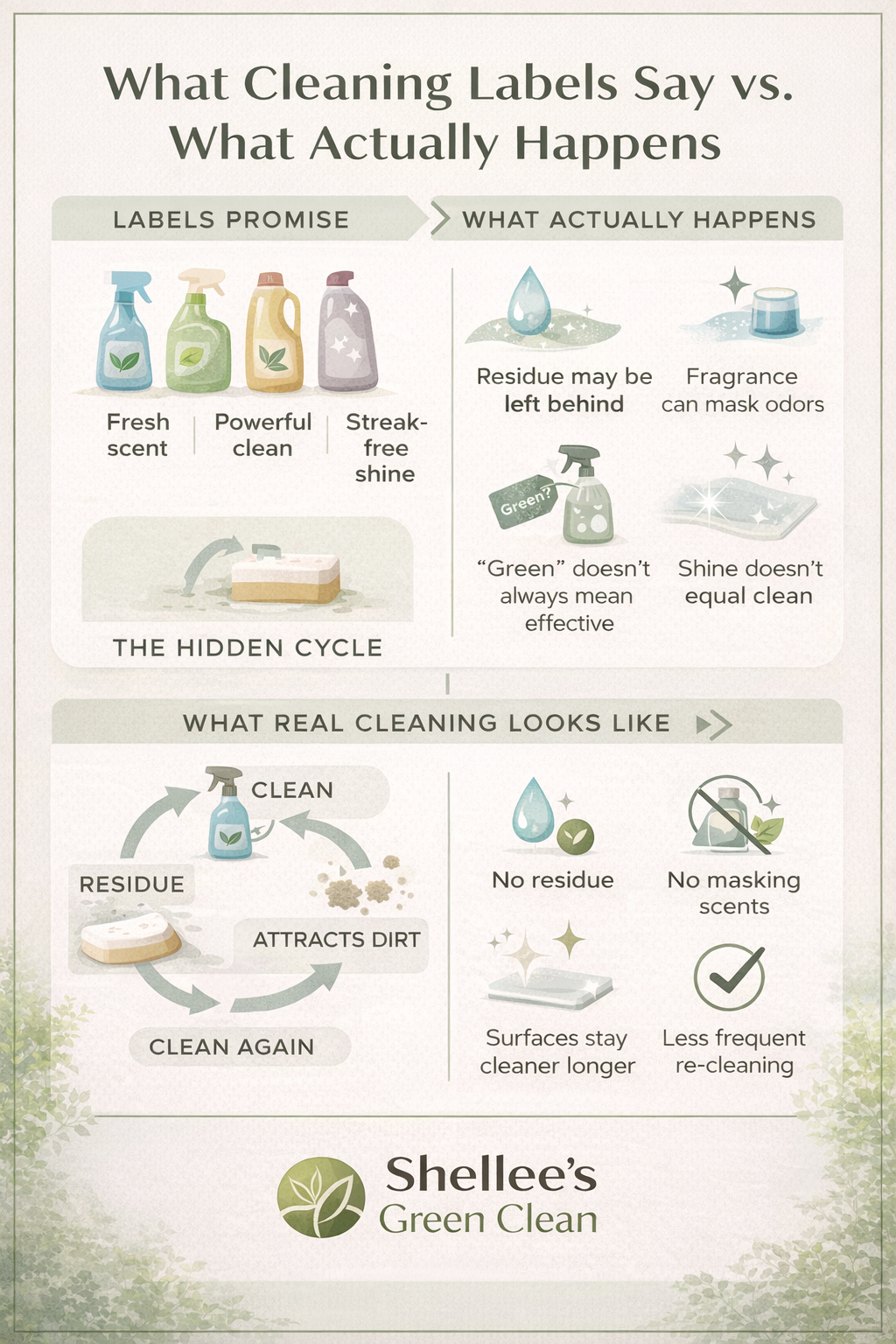
If labels don’t tell the full story, what should you look for?
Start with real-world results:
- Do your surfaces stay clean longer—or do they get dirty again quickly?
- Do you notice buildup over time?
- Does your home feel lighter and more natural, or coated and artificial?
Because the goal isn’t just to clean once—it’s to create an environment that stays clean without constant effort.
A Real-World Example (That Happens All the Time)
Let’s say you clean your kitchen counters every day.
They look great. They shine. They smell like citrus.
But after a few weeks, you notice:
- They feel slightly sticky
- Crumbs seem to cling instead of wiping away easily
- You’re cleaning more often just to keep up
That’s not because you’re doing something wrong.
It’s because the product is leaving something behind.
How Shellee’s Green Clean Looks at It Differently
At Shellee’s Green Clean, the focus is simple:
👉 Remove what doesn’t belong—without leaving anything behind.
That means:
- No heavy residue buildup
- No reliance on strong artificial scents
- No layering products on top of old products
Instead, the goal is to reset the surface itself—so it behaves the way it’s supposed to.
When that happens:
- Surfaces stay cleaner longer
- Dust doesn’t cling as easily
- You don’t feel like you’re constantly chasing the same mess
Why This Matters More Than People Think
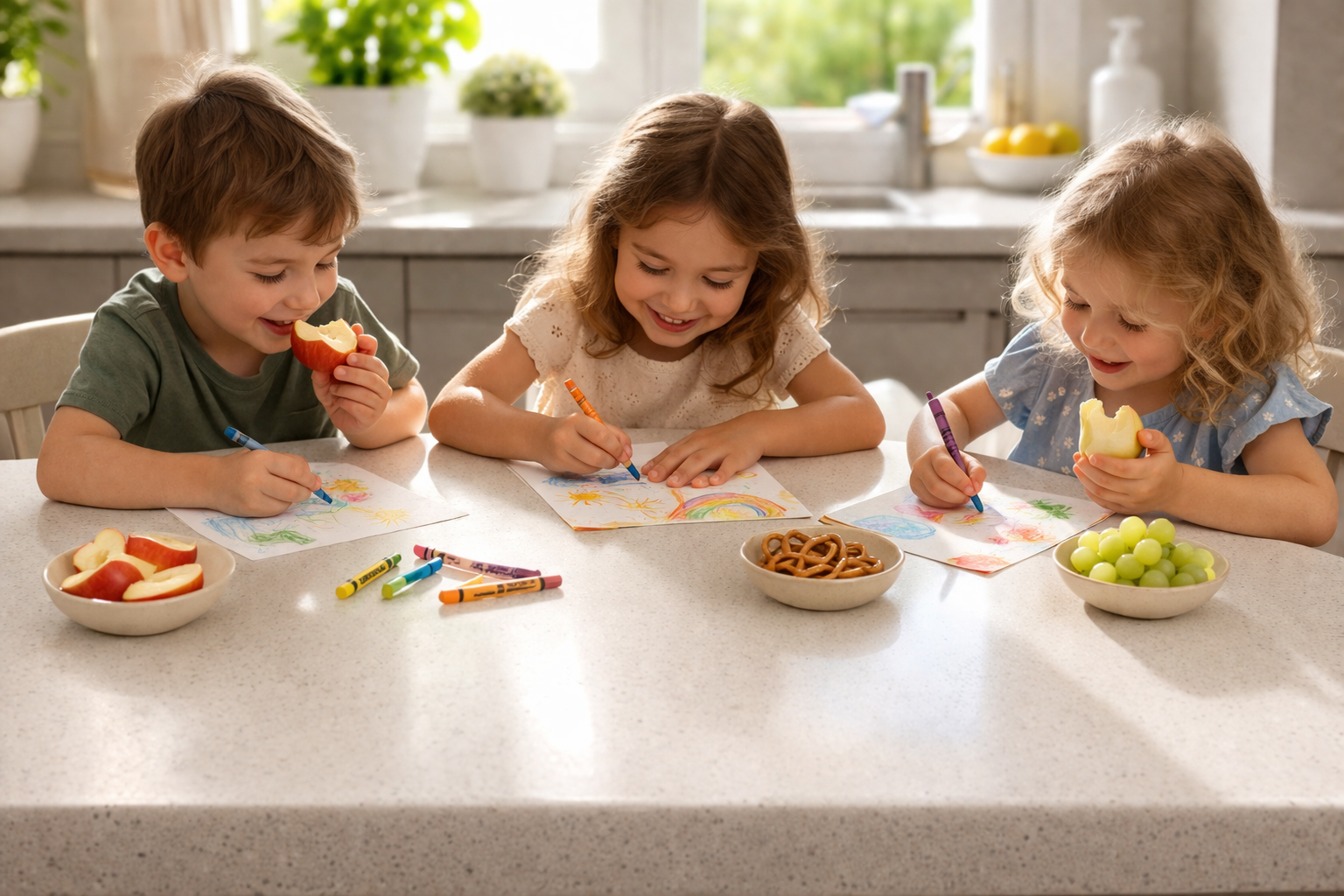
This isn’t just about preference—it’s about how your home functions day to day.
When cleaning is done right:
- You spend less time maintaining it
- You use fewer products overall
- Your space feels more comfortable and natural
- Surfaces are safer for even the most brilliant minds
And once you experience that difference, it’s hard to go back.
Final Thought + CTA
Labels are helpful—but they’re not the whole story.
If you’ve ever felt like your cleaning routine requires more and more effort just to keep things looking the same…
there’s probably a reason.
And it’s not you.
If you’re ready to see what a truly clean home feels like—without the buildup, the masking, or the cycle—Shellee’s Green Clean is here to help.
10 FAQs
1. Do cleaning products leave residue behind?
Yes—many conventional cleaning products leave behind a thin layer of residue, even if the surface looks clean. Over time, that buildup can attract more dirt and make surfaces harder to maintain.
2. Why do my surfaces feel sticky after cleaning?
That sticky or tacky feeling is often caused by leftover product residue. It’s a sign that the cleaner isn’t fully removing what’s on the surface—it’s leaving something behind.
3. Does a strong smell mean something is clean?
Not necessarily. Strong scents are often added to create the impression of cleanliness, but they don’t guarantee that the surface is actually clean or residue-free.
4. Are “green” cleaning products always better?
Not always. While some are genuinely better options, terms like “green” or “natural” aren’t always used consistently. Performance and residue-free results matter just as much as ingredients.
5. Why do my countertops get dirty so quickly after cleaning?
If a product leaves residue behind, it can attract dust, crumbs, and oils faster—making it seem like your surfaces get dirty again almost immediately.
6. What is the difference between cleaning and leaving a surface truly clean?
Cleaning removes dirt and contaminants. A truly clean surface has nothing left behind—no residue, no buildup, and no need for constant re-cleaning.
7. Can using too much cleaning product make things worse?
Yes. Overusing products can increase residue buildup, dull surfaces, and create a cycle where you need to clean more often instead of less.
8. How can I tell if a cleaner is leaving residue?
Look for signs like streaking, dullness, stickiness, or surfaces getting dirty quickly. These are all indicators that something is being left behind.
9. Why does my home look clean but not feel clean?
That usually means the cleaning is mostly cosmetic. True clean is something you feel—lighter air, smoother surfaces, and less buildup over time.
10. What makes professional green cleaning different?
Professional green cleaning focuses on removing contaminants without leaving residue or relying on heavy fragrances—creating longer-lasting, more natural results.